




Unacceptable behaviours
The SoR is determined to challenge bullying and harassment wherever they occur, to ensure all radiographers and students feel safe in the workplace


Almost a fifth of all NHS staff report that they have been bullied in the workplace by colleagues, and more than 12 per cent have experienced bullying in the past year from their manager.
In April 2024, the SoR updated its open letter urging all members to be vigilant in challenging unacceptable behaviour, with a particular focus on supporting and protecting students while on placement. “We recognise that students are among the most vulnerable of our members,” wrote Nichola Browne, the SoR’s students and new professionals officer. “Often when adverse events or behaviours are experienced, whether in an academic or clinical setting, it can be extremely difficult for a student to challenge or report these.”
The society also launched a National Student Placement Survey in 2024, giving trainee radiographers a chance to share their experiences and to help the SoR develop policy to improve student placements.
Both the university and the clinical placement site have a duty of care for all of their students and will have initiatives in place for you to safely report any acts of discrimination. Additionally, SoR staff and workplace representatives are trained to challenge discrimination in the workplace and will always be available to offer a safe space to discuss any issues or concerns you have, however trivial you feel they may be.
What is unacceptable?
All offensive, threatening, violent and abusive language and behaviour is always unacceptable, whatever your role, but people will not always feel confident enough to speak up and may even go along with it so as not to draw attention to themselves.
Health Education England (HEE), now part of NHS England, defines bullying as: “Offensive, intimidating, malicious or insulting behaviour, an abuse or misuse of power through means that undermine, humiliate, denigrate or injure the person to whom it is directed.”
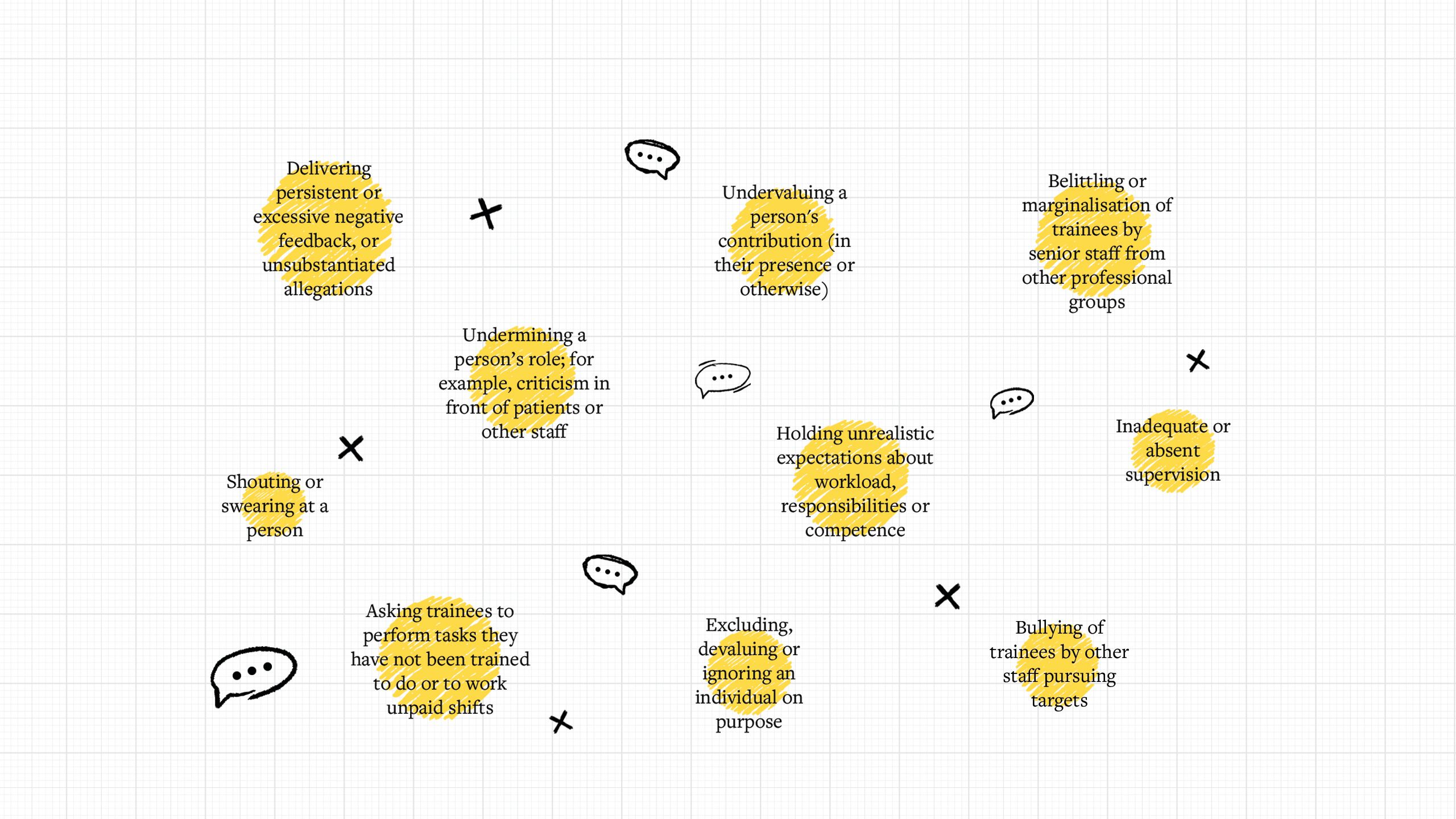
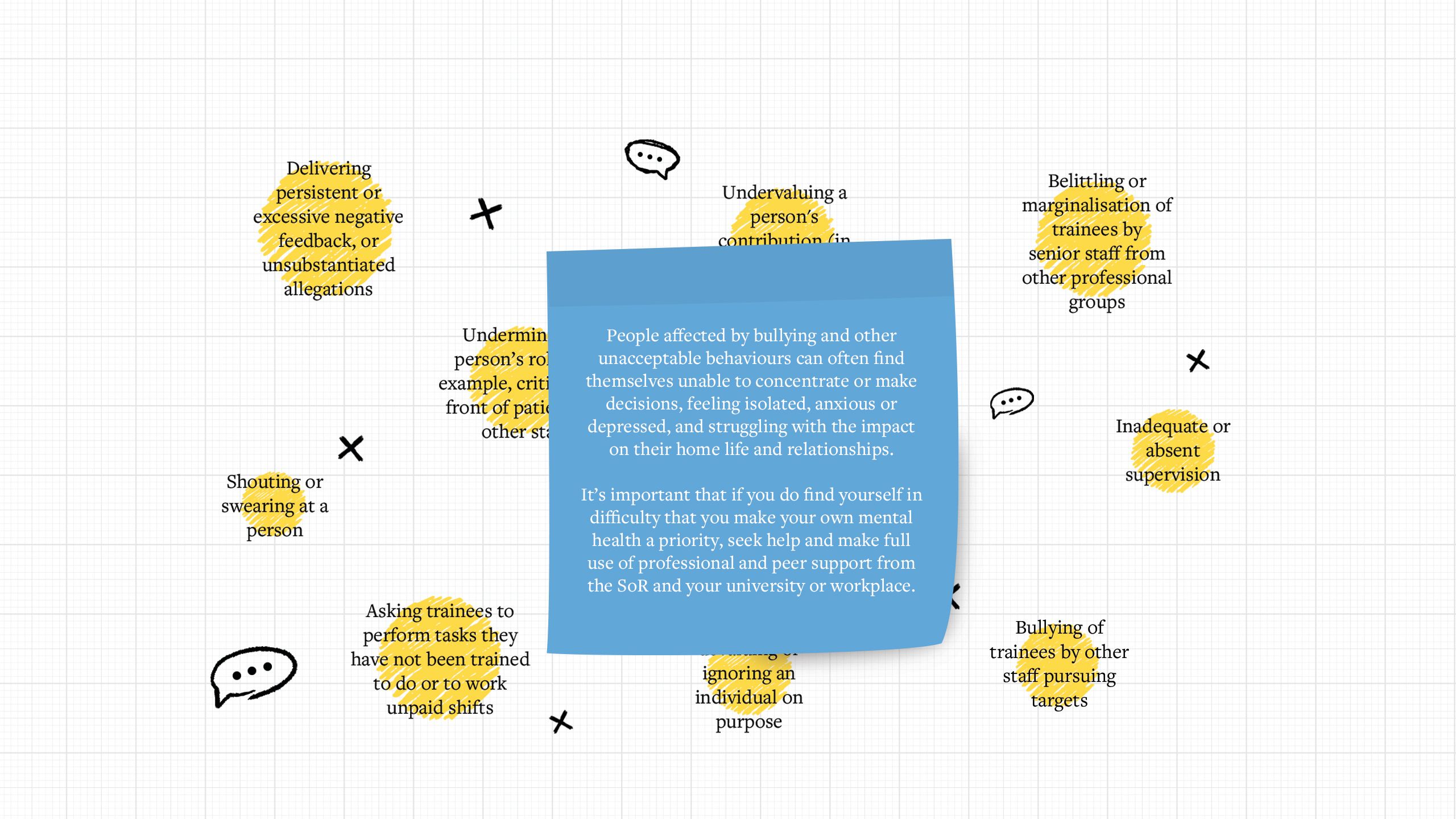
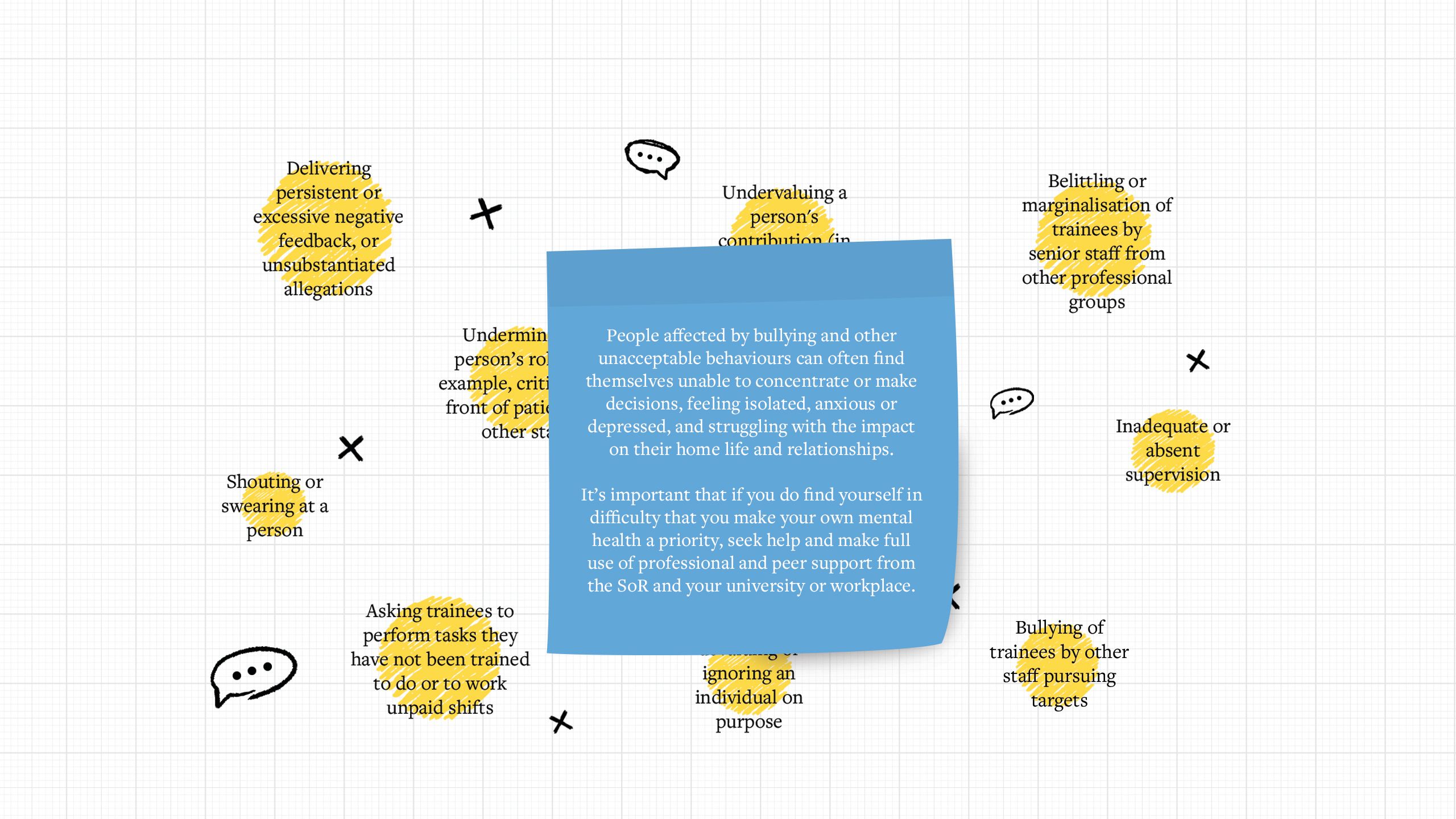
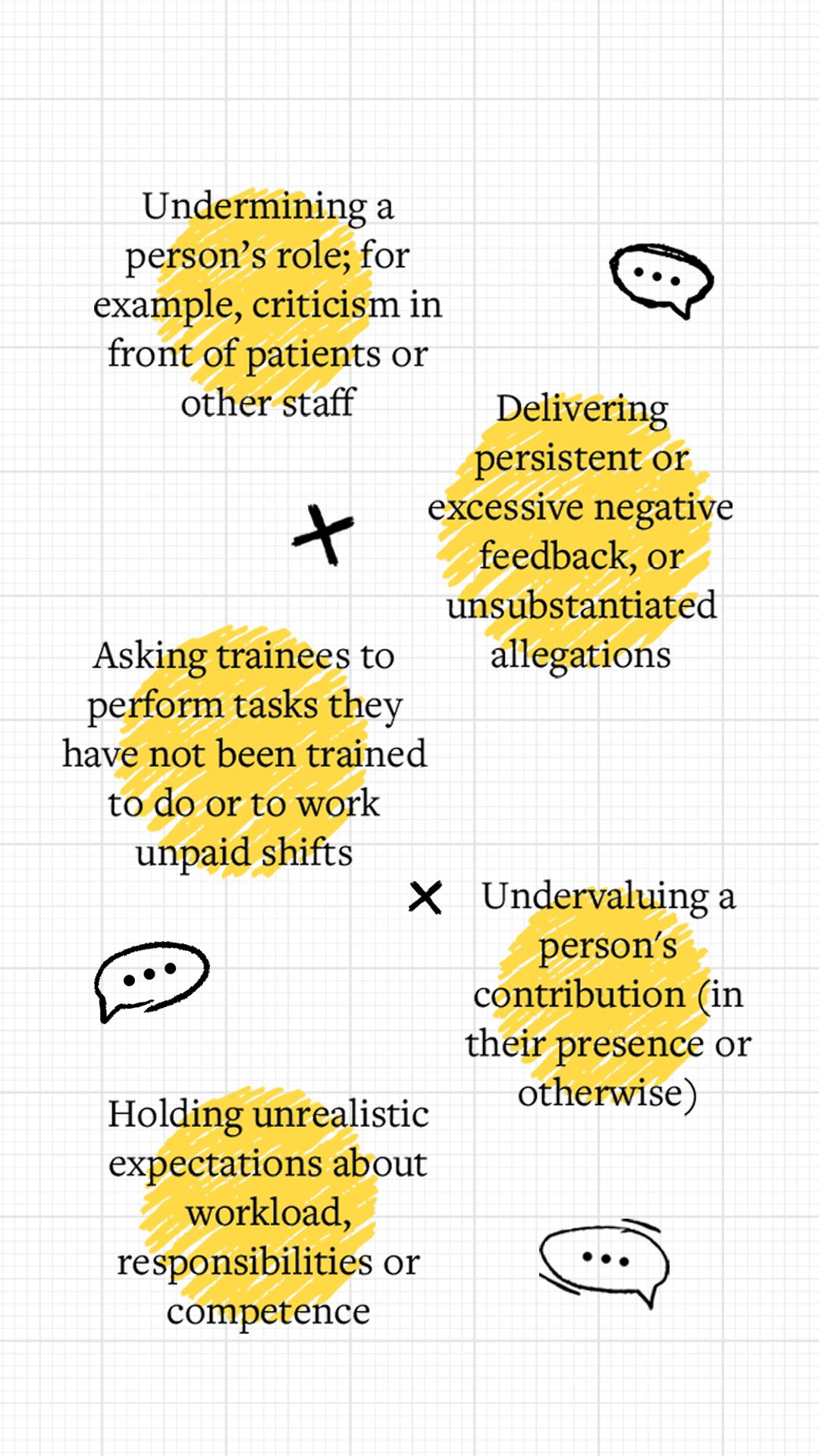
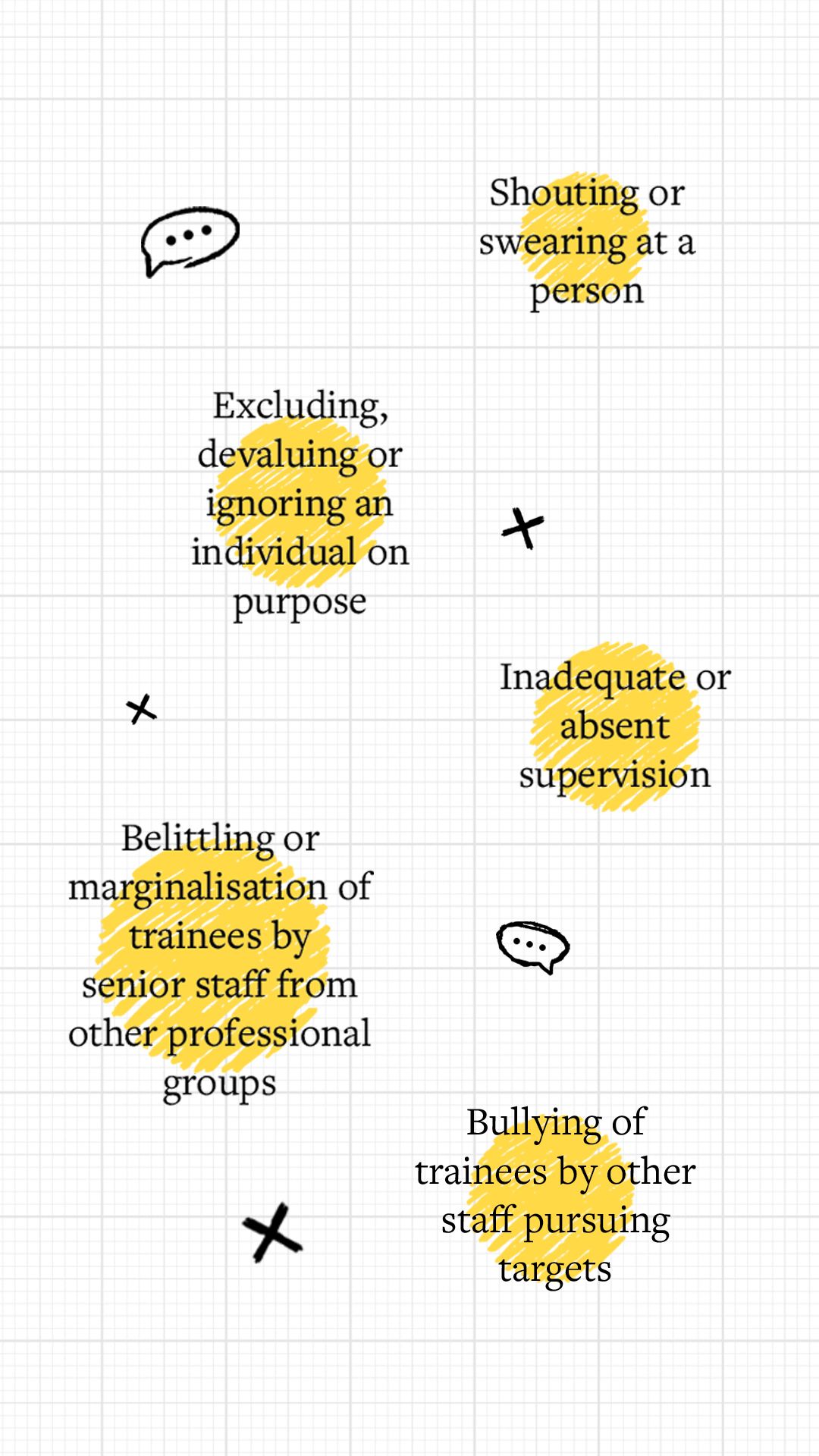
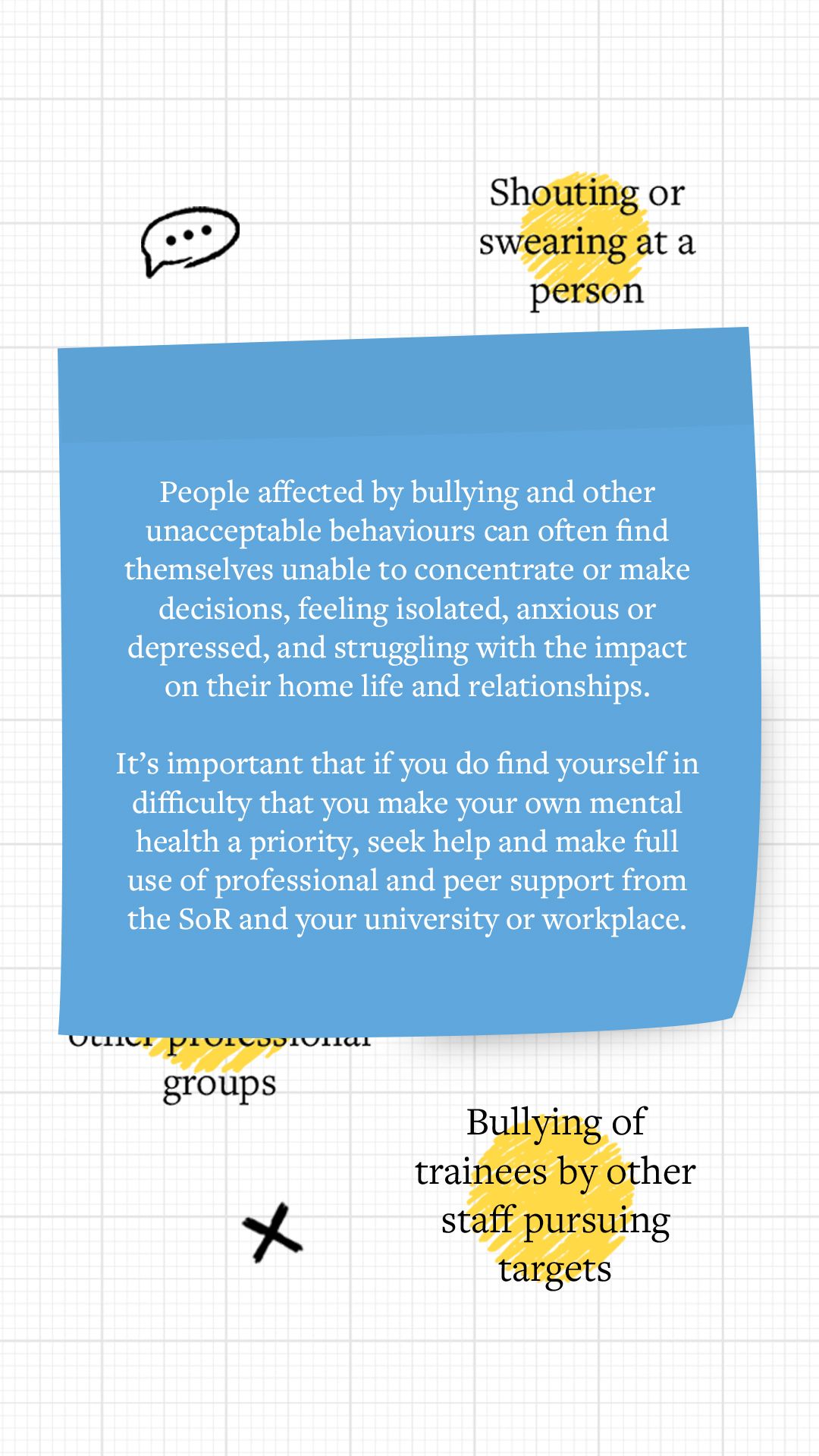
Bullying behaviour can be physical, verbal, emotional, sexual or exploitative; it can be direct or indirect, face to face or online. It can also range from very obvious to subtle behaviours; for example, these types highlighted by HEE:
(scroll to reveal)
Almost a fifth of all NHS staff report that they have been bullied in the workplace by colleagues, and more than 12 per cent have experienced bullying in the past year from their manager.
In April 2024, the SoR updated its open letter urging all members to be vigilant in challenging unacceptable behaviour, with a particular focus on supporting and protecting students while on placement. “We recognise that students are among the most vulnerable of our members,” wrote Nichola Browne, the SoR’s students and new professionals officer. “Often when adverse events or behaviours are experienced, whether in an academic or clinical setting, it can be extremely difficult for a student to challenge or report these.”
The society also launched a National Student Placement Survey in 2024, giving trainee radiographers a chance to share their experiences and to help the SoR develop policy to improve student placements.
Both the university and the clinical placement site have a duty of care for all of their students and will have initiatives in place for you to safely report any acts of discrimination. Additionally, SoR staff and workplace representatives are trained to challenge discrimination in the workplace and will always be available to offer a safe space to discuss any issues or concerns you have, however trivial you feel they may be.
What is unacceptable?
All offensive, threatening, violent and abusive language and behaviour is always unacceptable, whatever your role, but people will not always feel confident enough to speak up and may even go along with it so as not to draw attention to themselves.
Health Education England (HEE), now part of NHS England, defines bullying as: “Offensive, intimidating, malicious or insulting behaviour, an abuse or misuse of power through means that undermine, humiliate, denigrate or injure the person to whom it is directed.”
Bullying behaviour can be physical, verbal, emotional, sexual or exploitative; it can be direct or indirect, face to face or online. It can also range from very obvious to subtle behaviours; for example, these types highlighted by HEE:
(scroll to reveal)





Challenging safely
While bullying is not against the law, harassment is illegal. Harassment is defined as unacceptable behaviour that relates to a protected characteristic; for example, age, sex, race, religion or sexual orientation.
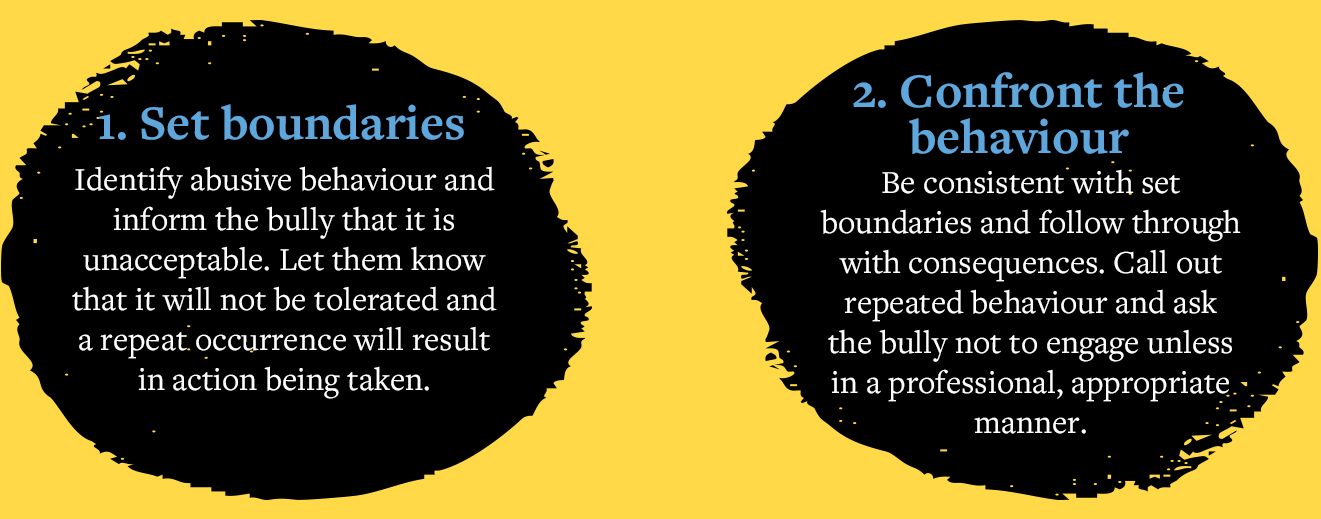
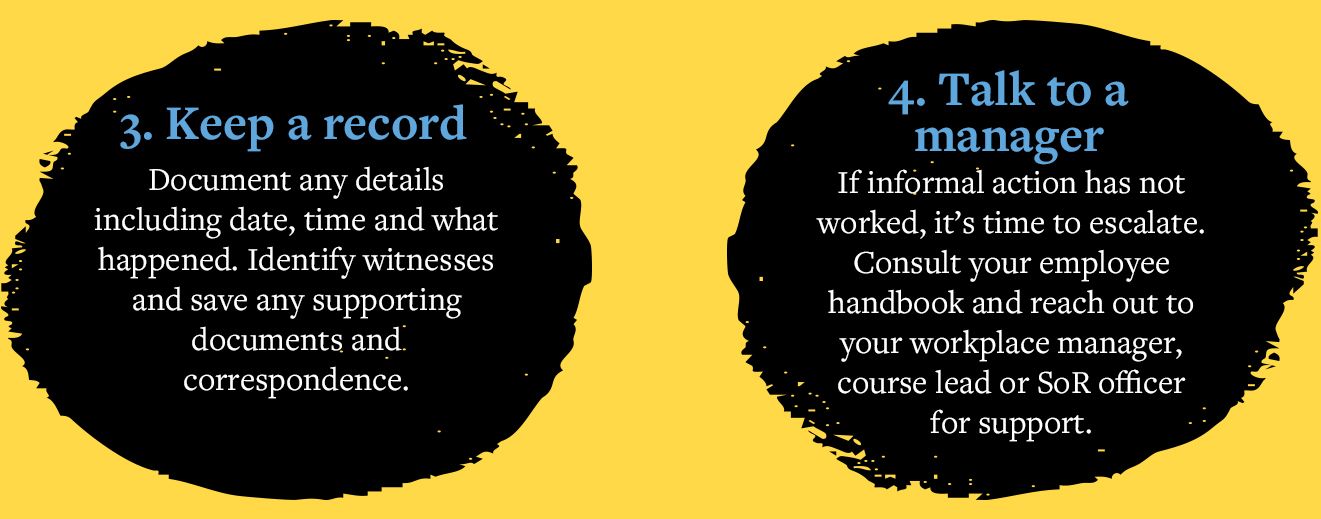
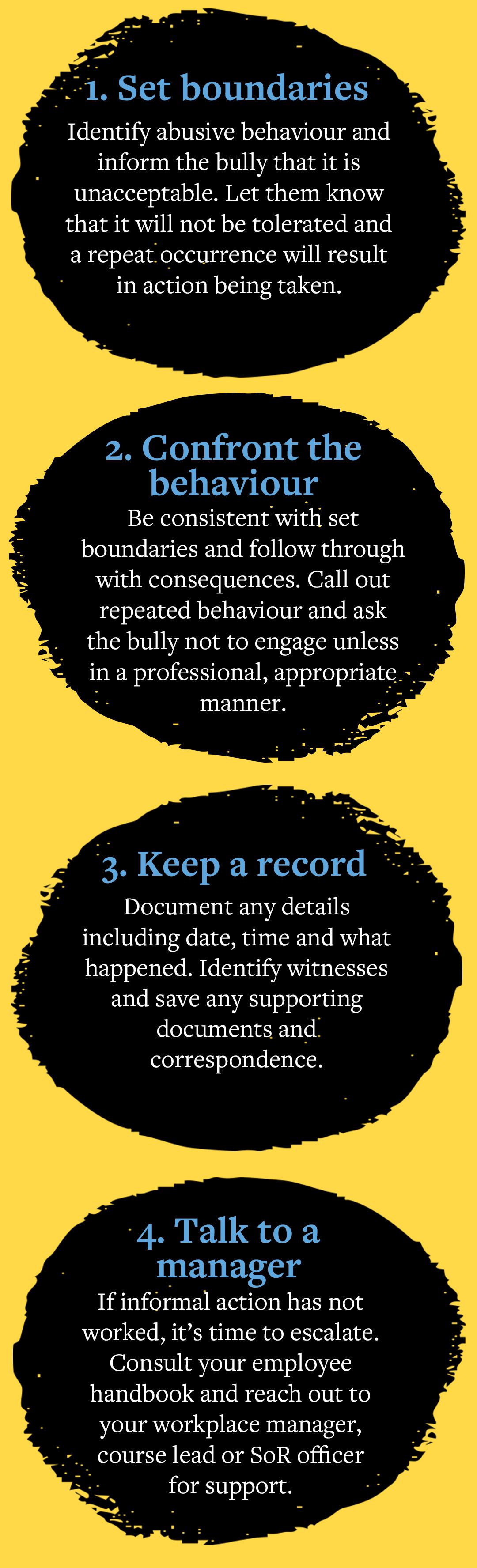
There are specific actions you can take to challenge these behaviours, while always considering that your own safety is paramount:

Challenging safely
While bullying is not against the law, harassment is illegal. Harassment is defined as unacceptable behaviour that relates to a protected characteristic; for example, age, sex, race, religion or sexual orientation.
There are specific actions you can take to challenge these behaviours, while always considering that your own safety is paramount:

Bystander intervention
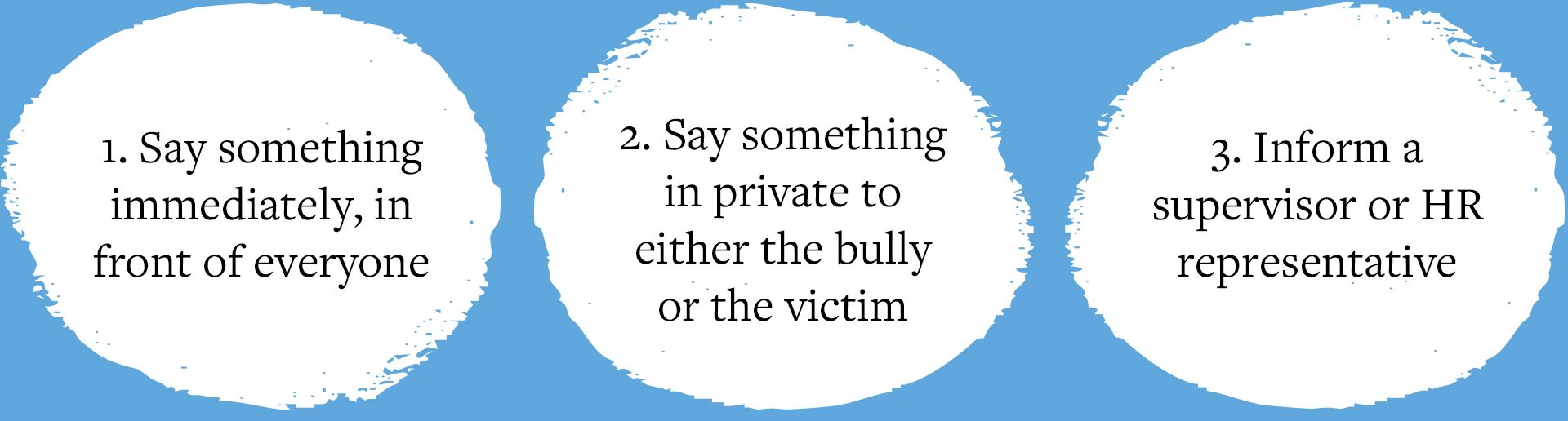
Empowering the bystander is one of the most effective ways to halt workplace bullying. A bystander witnessing unacceptable behaviour can do one of three things, bearing in mind the likely preference of the individual who is the target of the abuse.


“We are calling on all SoR members to be vigilant,” said Nichola, “and to report any discrimination witnessed towards students in either their academic or clinical learning environment. If you are personally experiencing unfair treatment, please contact your university or us directly for help and support. Please don’t go through this alone. You matter. Help us protect you, and join us in challenging discrimination.”
Watch the recorded video on ‘Challenging unwanted behaviours in the workplace’ below
Find out more
For assistance contact Nichola Browne, SoR students and new professionals officer, at NicholaB@sor.org, or the SoR trade union team at tuir@sor.org
There is also information and resources available on the government's Stop Bullying website, the NHS website and the SoR website.
Image credit:
Getty Images


Read more