

BRIC by BRIC: inside Plymouth’s Brain Research and Imaging Centre
Synergy joined SoR president Katie Thompson on a recent visit to the institute to learn more about the groundbreaking research taking place there


By Marese O'Hagan
By Marese O'Hagan
Radiography research is constantly pushing the boundaries of what the profession can achieve, treat and discover. Rarely is this innovation seen more clearly than at the Brain Research and Imaging Centre (BRIC), a specialised brain research institute located in Plymouth, South West England.
Synergy recently accompanied SoR president Katie Thompson on a visit to BRIC to learn first-hand about the breadth of the research happening at the centre and to speak to the experts making groundbreaking progress there.
Arriving at BRIC on a cloudy November morning, Synergy was greeted by Nima Norbu Sherpa, a National Institute for Health and Care Research (NIHR) pre-doctoral clinical fellow who works at the centre. Nima is supervised by Elsa Fouragnan, professor of neuroscience and executive director at BRIC, and Dr Nadège Bault, a lecturer in cognitive neuroscience at the University of Plymouth and head of BRIC operations.

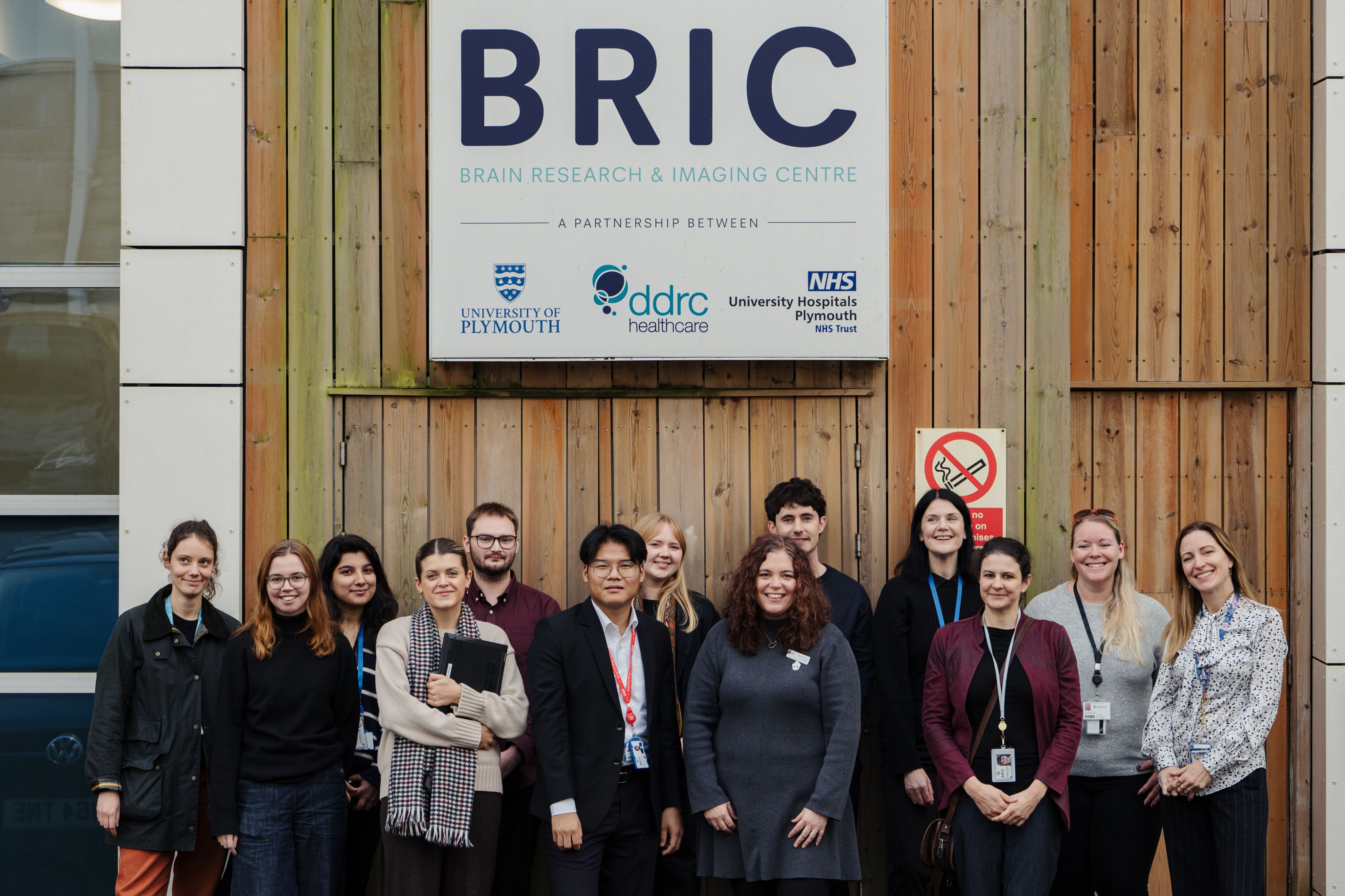
The team at the Brain Research and Imaging Centre in Plymouth
The team at the Brain Research and Imaging Centre in Plymouth
Pioneering brain study
The result of a joint effort from the University of Plymouth, University Hospitals Plymouth NHS Trust and hyperbaric oxygen therapy specialist DDRC Healthcare, BRIC is the leading multi-modal neuroimaging brain research centre in South West England. The centre opened in 2021 and comprises eight labs and an estimated 50 teams from across the university, as well as around 50 PhD students and post-doctorates. Its main building contains a number of specialised facilities, including a 3-Tesla MRI facility.
After initial introductions – and hearing a brief history of BRIC – Elsa showed us around BRIC’s secondary transcranial ultrasound stimulation (TUS) lab, where the centre’s addiction studies are carried out. A second lab was deemed necessary following the success of BRIC’s initial TUS research.


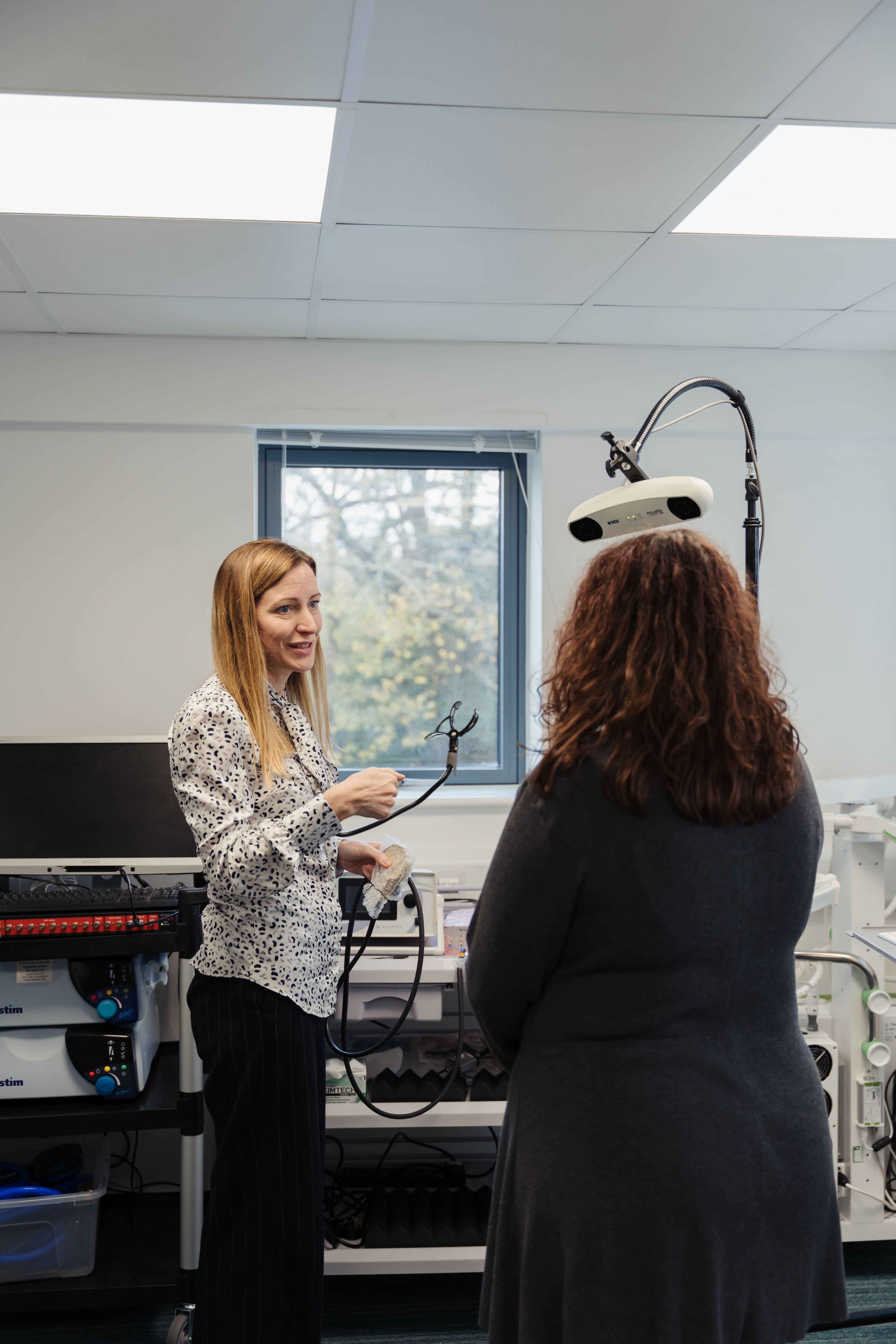
Professor Elsa Fouragnan with SoR president Katie
Professor Elsa Fouragnan with SoR president Katie
Insights into OCD and alcohol use disorder
Elsa is leading research into the potential applications of TUS at BRIC. When we visited, a trial was running at the centre that aimed to measure the effects of controlled ultrasound on individuals with obsessive compulsive disorder (OCD) and alcohol use disorder (AUD). BRIC is one of the first research centres in the world to use TUS to investigate AUD specifically.
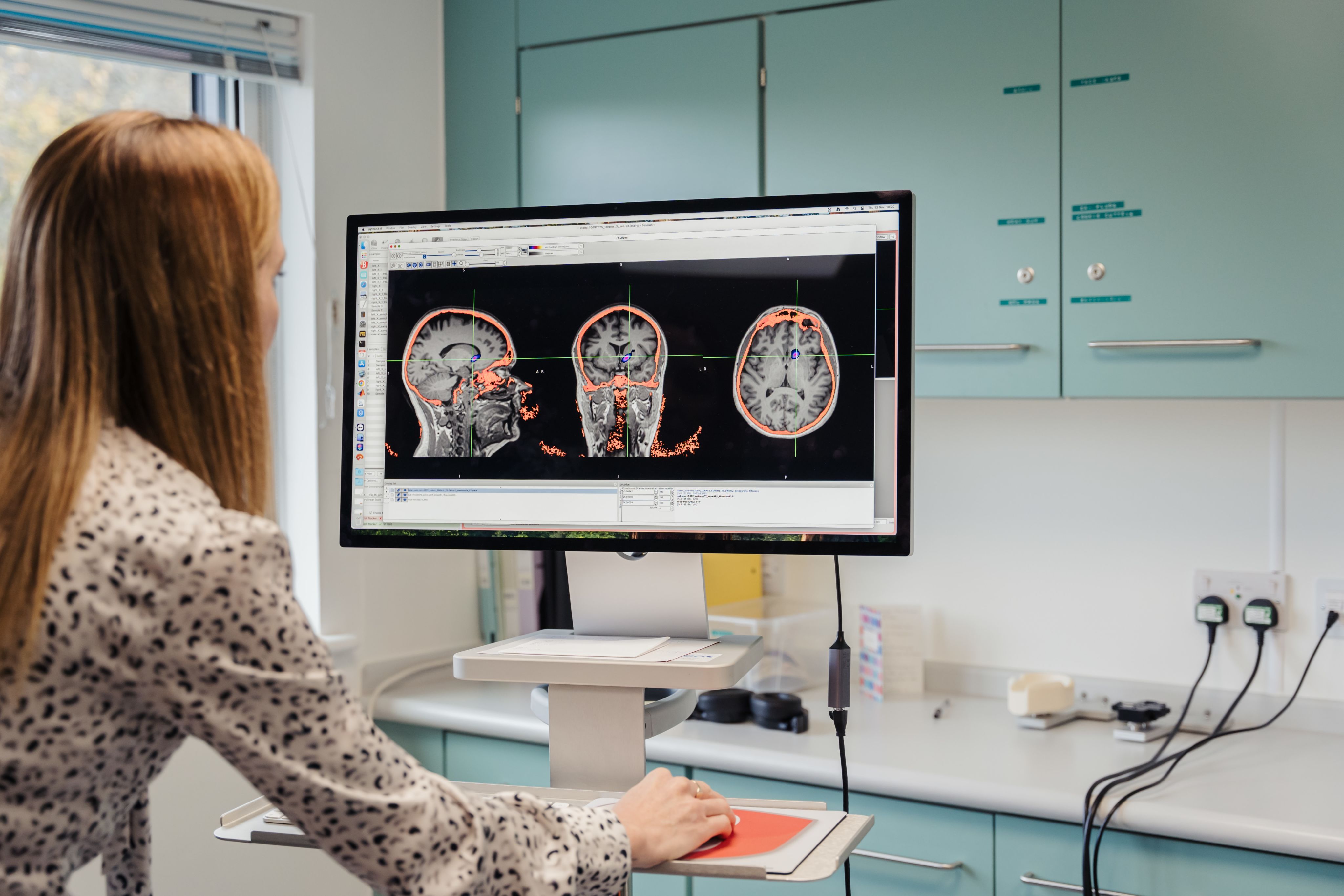
In order to take part in the trials, participants had to agree to fill out questionnaires about their mental health and attend weekly ultrasound brain stimulation sessions at the centre. As part of these sessions, participants were put in the centre’s MRI scanner to get a T1 weighted image of their brain. Then the TUS process began. “We ask them to relax, we prepare their hair with some gel and then we position the ultrasound with the neuronavigation system,” Elsa explains. “And they’ll just relax and we perform the intervention for a few minutes. And after that, we put them in the scanner to check how their brain has changed as a result of the ultrasound.”
For the purpose of this study, the TUS targeted the nucleus accumbens. “It’s the primary target when you’re interested in ADHD, eating disorders, addiction or OCD,” says Elsa. The nucleus accumbens is a small area of the brain – around the size of a blueberry – that influences how we process rewards and feelings of enjoyment. With the TUS delivered by the focused ultrasound machine, the nucleus accumbens is targeted directly, temporarily affecting how it functions.
“We would use ultrasound to induce temporary change in this part of the brain, which you can also call neuroplasticity,” Elsa explains. “And the neuroplasticity will then change their cognitive process, and hopefully that will be beneficial for the person if it was, for example, someone suffering from a mental health problem.”
While the addiction trial at BRIC doesn’t promise a cure, or even a lessening of symptoms, evidence of the effects of TUS on the nucleus accumbens has been very encouraging for the researchers. “What we know so far is that ultrasound can induce neuroplasticity for a few hours,” Elsa continues. “So even a brief, one-minute train of pulses of ultrasound to this part of the brain could change the way this part of the brain behaves, how it communicates with its neighbours, and that will induce changes for up to two hours.
“We’ve seen that by putting people in the scanner after they have received the ultrasound to see how their brain is changing, and we have been able to measure that.”

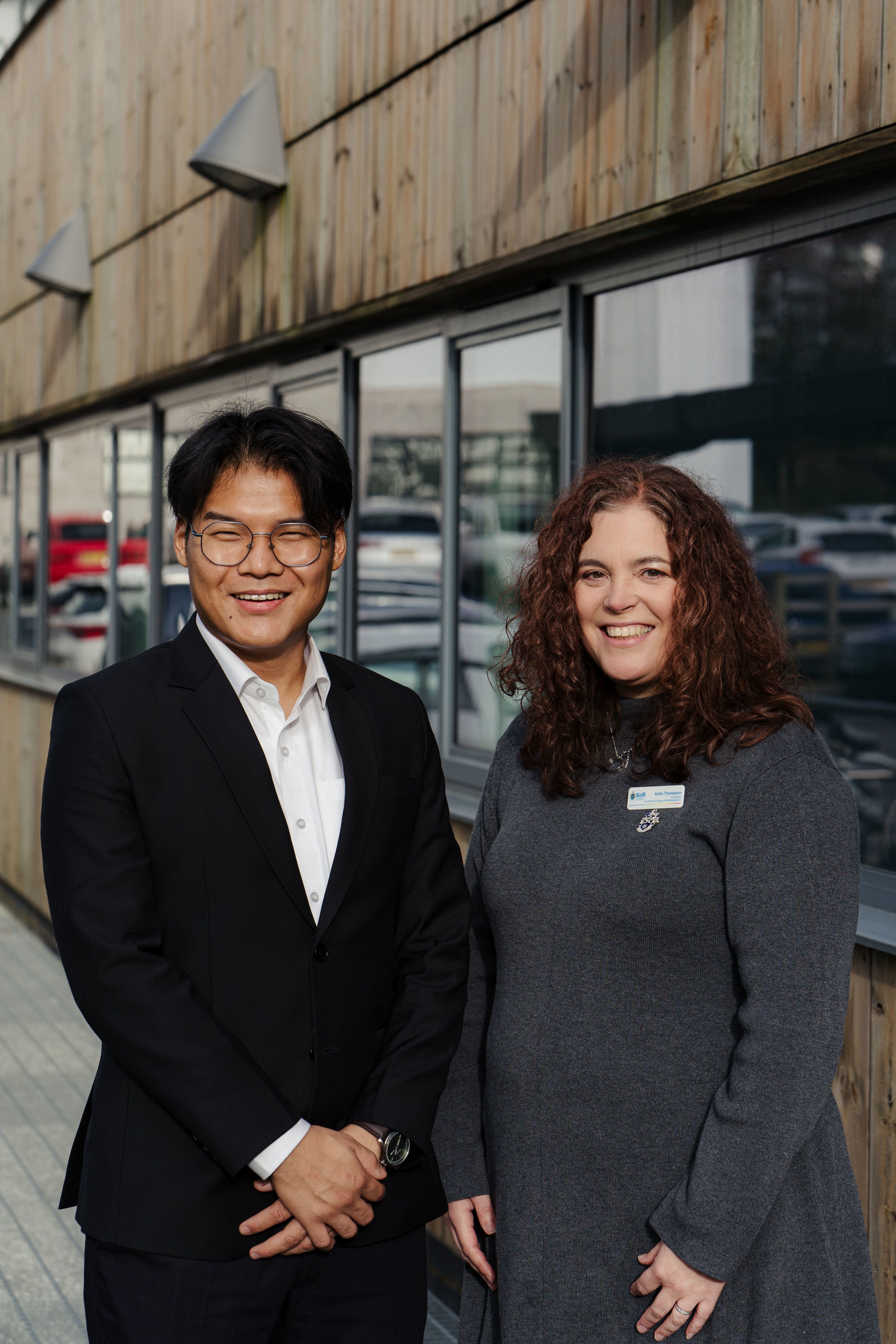
Nima Norbu Sherpa (left) and Katie Thompson
Nima Norbu Sherpa (left) and Katie Thompson
An eye-opening experience
Nima tells Synergy about his unexpected journey to the brain centre. He studied radiography at Glasgow Caledonian University and completed his MSc pre-reg course there in January last year. Though he had plans to go on to work as a radiographer, it was through a change in circumstance that he found himself as a researcher in Plymouth. “When I finished my course, for a brief time, I was about to start as a Band 5 radiographer in Leicester Royal Infirmary,” he says. “But before I could begin my role, I was awarded the NIHR Pre-Application Support Fund, which bought me one year of dedicated research time funded by the NIHR. I’ve been a researcher at the University of Plymouth ever since.”
Carrying out MRI scans on participants formed part of Nima’s responsibilities at BRIC for his NIHR-funded year. As well as learning to develop and use the focused ultrasound machine, Nima collected consent forms, ensured participants were MRI-compatible and carried out post-processing on images to make sure they were ready for neuronavigation and TUS.
It was transformative for Nima, who got to work from a perspective some radiographers never see. “As a radiographer, working in a… neuroscience lab, that’s very fascinating,” he says. “I learn from my colleagues every day. It’s been an eye-opening experience.”
In March, Nima will move to London to start a Band 6 post as an NIHR pre-doctoral clinical fellow at King’s College London. He will be the lead researcher in two studies using the 7 Tesla MRI scanner, an ultra-high-field brain imaging system that captures finer detail than standard MRI scanners, to investigate how TUS influences addiction mechanisms in heavy tobacco smokers and frequent cannabis users.
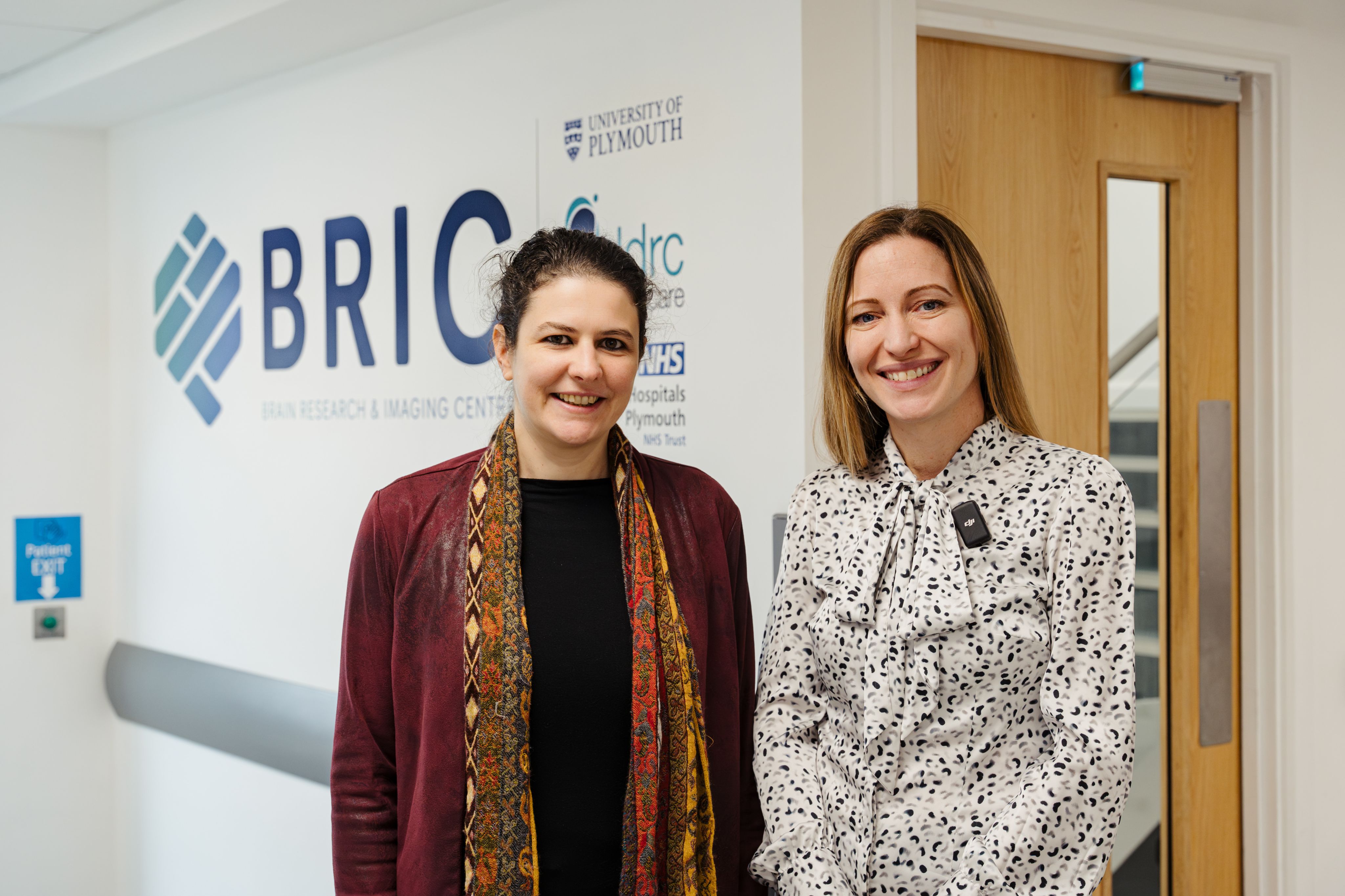
Dr Nadège Bault (left) and Professor Elsa Fouragnan
Dr Nadège Bault (left) and Professor Elsa Fouragnan
Making better decisions
As well as going on a tour of the building and watching TUS equipment demonstrations, we also got a peek into the centre’s interdisciplinary neuroscience hub – the Neural Organisation of Movement, Action and Dynamics Lab.
And we spent time with Nadège and talked about her role at the centre and her own research. She has worked with BRIC since its inception – she was recruited in 2019 and arrived in Plymouth when the centre was still under construction.
She conducted her PhD work in Lyon, France, going on to earn her PhD in cognitive neuroscience in 2010. This preceded a postdoctoral period at the University of Amsterdam, where she worked until 2014, before moving on to work as a researcher at Cimec at the University of Trento, Italy until 2019.
Nadège’s experience made her the ideal candidate to work at BRIC, where cognitive neuroscience is the principal area of research. At the centre, her main responsibility is ensuring that everything runs smoothly and that resources are distributed correctly between different types of research.
Nadège’s own research looks mainly at decision making and how it can be affected by social interactions. “I approach the problem with different tasks in which you have to make decisions to share resources with others,” she explains. “You can learn from other people in volatile environments how to make better decisions. And I look at different types of interventions such as anxiety or brain stimulation to understand how this will perturb the brain mechanisms.”
As previously mentioned, focused ultrasound stimulation to treat OCD and AUD is being trialled at BRIC. Nadège explains that depression and Parkinson’s disease are two areas the centre is also looking into applying TUS to. “We will look at the brain functioning from different perspectives – so from a behavioural perspective, computational modelling perspective, neuroimaging perspective – and we are really trying to put all of this information from those different techniques together,” she says. “We have many topics of research, and one of the main techniques that we use that has many potential applications is, of course, the ultrasound stimulation.”
What is the purpose of BRIC’s research?
As our time at BRIC came to an end, headshots and team photos of the centre’s researchers and students were taken outside. I had some time to digest the whirlwind of information I had been exposed to that morning – the culmination of many combined years of expertise in the fields of imaging and the human brain.
If the trials at BRIC can prove unquestionably that behaviours associated with AUD and OCD can be alleviated by focused ultrasound, it could be life-changing for those with addictive disorders. For Elsa, this is the main purpose of the research happening at the centre – to “better understand the human brain, but also advance neurotechnology in a way that could be beneficial for people who are suffering from mental ill health”.
But the researchers are some way off proving this hypothesis for sure. In the meantime, what is the impact of the research happening at BRIC?
Though the findings so far have been encouraging, the true and final impact is a work in progress. Coming to the end of my interview with Nima, he predicts that, if focused ultrasound research in the UK continues at its current rate, it will have an undeniable impact on the radiography profession as a whole going forward – particularly for those who wish to become research radiographers or have careers as clinical academics. Over time, it may even create new therapeutic sonography roles within the profession.
He also points to the breadth of conditions linked to the nucleus accumbens that focused ultrasound could treat: “Diseases that range from Parkinson’s tremors to alcohol use disorders to depression or tics or epilepsy.”
While the researchers at BRIC see most keenly the potential impact of their research on the profession, the impact on individuals suffering with addictive behaviours and mental health disorders could be groundbreaking.
More about the Brain Research and Imaging Centre
The Brain Research and Imaging Centre, located in Plymouth, Devon is the most advanced multi-modal brain research facility in the South West.
A partnership between the University of Plymouth, University Hospitals Plymouth NHS Trust and DDRC Healthcare, the centre brings together expertise and technology to explore the human brain structure and its function in health and disease.
Read more