

Research leadership in radiography: embedding research into practice
An occupational therapist by background, Dr Lisa Ledger tells Synergy how her role will be instrumental in shaping research for radiographers




By: Dr Lisa Ledger, assistant director of allied health professions, National Institute for Health and Care Research
By: Dr Lisa Ledger, assistant director of allied health professions, National Institute for Health and Care Research
Using the best evidence on which to base my practice has been really important throughout my career. I feel passionately that we can only be assured of providing the best care and intervention to our patients, families and communities through adopting a research-informed approach.
Early in my career, I was less confident in research and only got involved in clinical audits and journal clubs. Over time, I moved into specialist posture and seating services where I discovered a real passion for person-centred practice and pressure ulcer prevention.
I have been involved in several studies on long-term conditions, such as self-management approaches for individuals living with complex posture and seating needs. My PhD topic was an accumulation of years practising and hearing patient stories around the importance of shared decision making and person-centred practice. I have not looked back since.


Shaunagh Campbell
Shaunagh Campbell

Soaad Gheleh
Soaad Gheleh
Shaping AHP research
My role with the National Institute for Health and Care Research (NIHR) is really exciting and important as it demonstrates the institute’s commitment to supporting the more underrepresented professions, such as allied health professionals (AHPs). My key aim is to develop and implement national initiatives to support the development of AHP research capacity and capability.
The role is broad and far reaching. It includes working as an ambassador within the NIHR and externally to strategically position, promote and lead AHP research to create research career opportunities at a national level. There is a key focus on equity, inclusion and belonging to ensure NIHR academic research opportunities reach the practitioners, areas and communities where it is most needed.
My role is also instrumental in shaping AHP research. It has a wide strategic reach, encompassing all AHP professions, and will be a conduit for change.
One significant development since I came into post has been launching the NIHR Developing Research Leaders Programme for Allied Health Professionals. The programme is aimed at those who aspire to become a research leader in health or social care and are committed to promoting a positive research culture and building research capacity and capability in their organisations. We are delighted that two radiographers, Shaunagh Campbell and Soaad Gheleh, were successful in this first cohort, alongside 22 others.
Optimising patient outcomes and experience
It is really important that research is embedded and incorporated in everything we do. Research-based practice for radiographers and all AHPs means using evidence from research studies to best inform and guide clinical decision making and service delivery.
Radiographers are uniquely placed to answer questions in the technology patient interface, such as investigating image quality, optimising technology and/or improving patient experience, all of which will contribute to improved outcomes.
There are also unique opportunities for AHPs to collaborate and investigate topics that are cross cutting. This includes diet and preparation for prostate cancer, exercise for patients diagnosed with cancer, coping with fear of recurrence and managing ‘scanxiety’.
Additionally, there are several important research areas in common within radiography, such as using magnetic resonance imaging or ultrasound for diagnosis and treatment, role extension and compassion fatigue in staff.
We know that by ensuring practice is based on the most up-to-date knowledge, it optimises patient outcomes and patient experience. Being involved in research as an AHP in whatever capacity is really exciting and rewarding. It promotes better work satisfaction and helps with job retention. It also allows AHPs to build confidence and skills and leads to different career opportunities and experiences.
The lack of knowledge and skills was highlighted in a recent survey conducted through the NIHR Diagnostic and Therapeutic Radiographers Incubator. Some of this is being addressed by the NIHR Incubator, which aims to stimulate, inspire and guide radiographers and ultrasonographers to engage in and lead research.


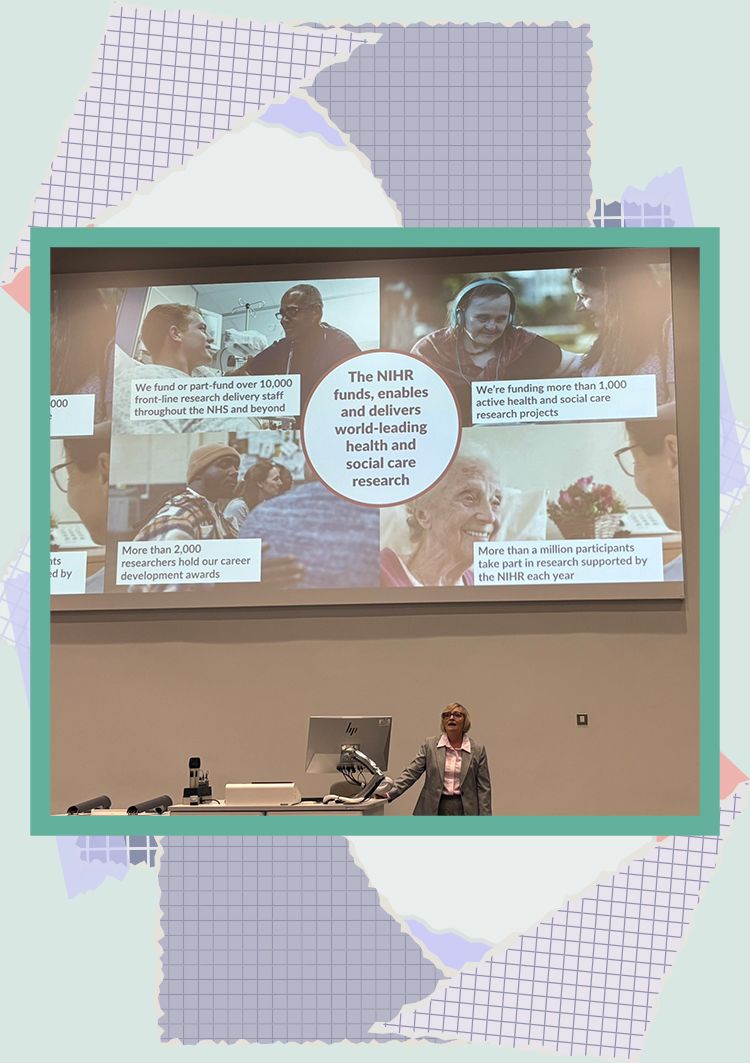
Lisa Ledger presenting
Lisa Ledger presenting
Addressing barriers and giving AHPs a voice
Some of the challenges facing radiographers and AHPs in pursuing research careers are similar. These include the lack of protected time for research and staffing shortages that create issues for timely backfill.
Radiographers have also reported that they recognise the value of research and understand its role in improving clinical practice. Many also expressed a desire to be more actively involved. However, they highlighted several barriers, including limited confidence in undertaking research activities and workplace cultures where research is not always viewed as a priority or fully supported.
In my role at the NIHR, I hope to address these barriers by working closely with the AHP community, professional bodies, chief AHP leaders, NHS England and the Community for Allied Health Professions Research (CAHPR). I want to ensure all 14 AHP professions have a voice and are involved in NIHR AHP developments.
It is important that the language we use and how we engage with our AHP communities is open, inclusive and speaks to all practitioners that research is for everyone. The new Developing Research Leaders Programme for AHPs will support practitioners to be part of research mobilisation in their areas, localities and organisations to inspire and grow the next generation of research leaders.


Feel the fear and do it – you won’t regret it
My main advice for those considering undertaking research would be to feel the fear and do it anyway. For some people, research can feel out of reach or just for academics, which is not the case – it is for everyone. Start small by talking to colleagues about your aspirations and research ideas.
Most trainees have to carry out research in their training and it is important to find research communities of practice for support and continue to be research active. CAHPR is also a really good point of contact with resources and contacts for support. Find an ally or allies in your institution – this is where the AHP community can be helpful.
The NIHR Diagnostic and Therapeutic Radiographers Incubator also has career profiles and case studies on its website that highlight the staff, service and patient benefits of radiography-centred research.
At this early stage in the development of the career pathway, it will look different for many people as it continues to evolve. The benefit of this is that there are opportunities to shape it in new ways – don’t feel constrained or discouraged. You can also access a range of radiographer-specific resources, including research development opportunities, toolkits, events, mentoring and career guidance.
There are many resources available to help you. The NIHR provides support to help AHPs develop research careers. These include:
- Courses and qualifications for those taking their first steps in research.
- Flexible training programmes to enable AHPs to balance a research and practice-based career.
- Support to help AHPs gain skills and experience along their academic career path.
- Research data and publications from NIHR-funded research.
- Research leadership programmes for AHPs.
I would encourage everyone to take that first step into research. You won’t regret it!
About the author
Dr Lisa Ledger was appointed as the first NIHR assistant director of allied health professions in June 2024, with a key focus on developing national initiatives to drive research career opportunities for AHPs. Lisa is a qualified occupational therapist and has worked in a range of health and care settings spanning 26 years, including rehabilitation, specialist seating and posture management.
Lisa has an MSc in rehabilitation science and a PhD in health sciences. Her areas of research are focused around pressure ulcer prevention and person-centred practice. She has held senior leadership positions within NHS organisations and integrated care systems, and quality assurance roles on behalf of professional bodies. She also has comprehensive experience in higher education institutions.
Lisa is particularly passionate about embedding research within practice and the vital role that all AHPs contribute to high-quality, person-centred practice.
Read more