

The need for connection: Therapeutic Radiographer Sheila Hassan on staying engaged in your region
Sheila Hassan - former president of the SoR, current London Council member – shares lessons from decades of engagement with the radiography profession and the benefit of SoR study days
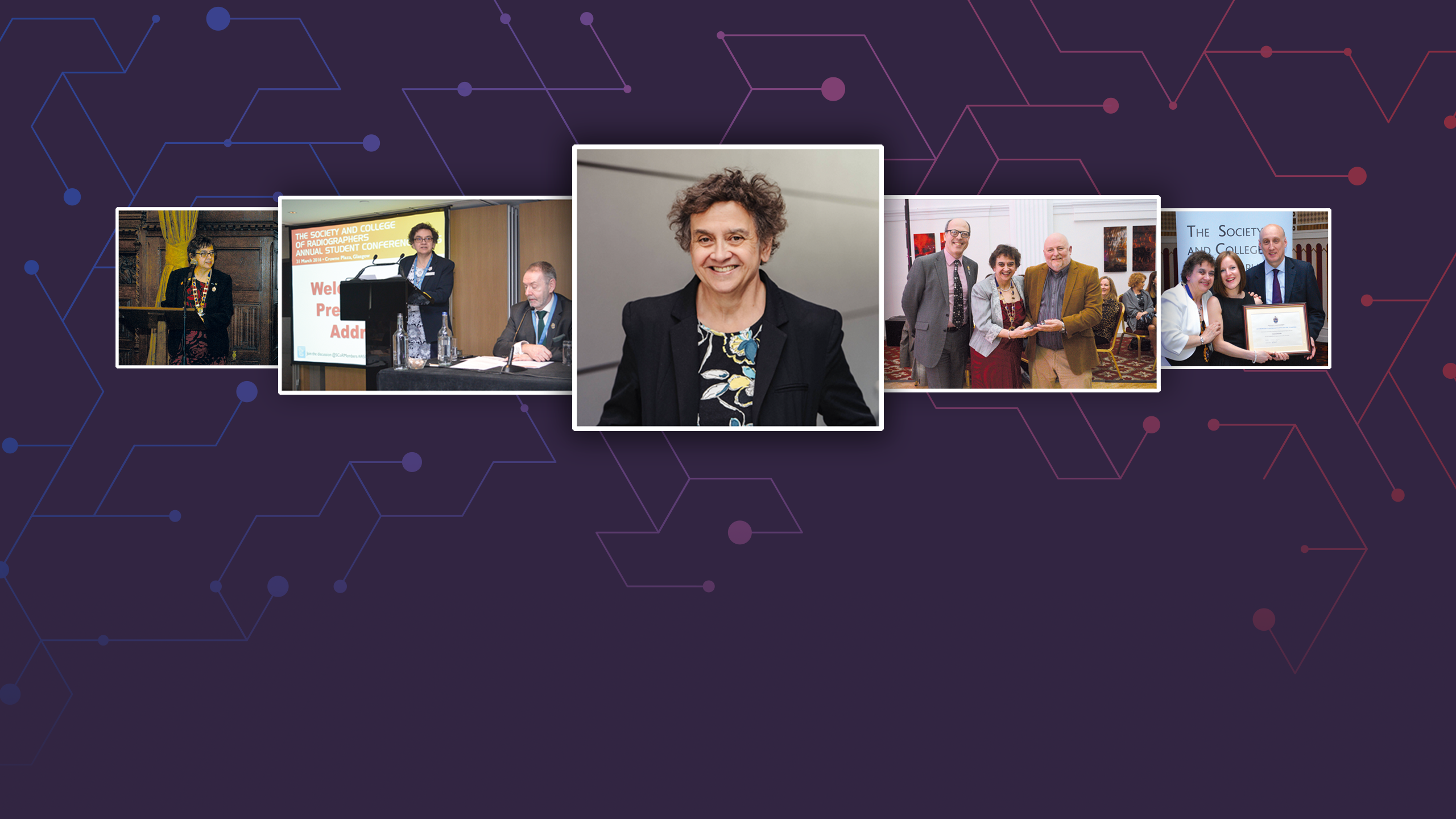

The need for connection: Therapeutic Radiographer Sheila Hassan on staying engaged in your region
The former SoR president and current London Council member shares lessons from decades engaging with the radiographer profession and the benefit of SoR study days




By Will Phillips, staff writer
By Will Phillips, staff writer
“Building connections,” says Sheila Hassan, “is one of the most important things we can do.”
Having qualified as a radiographer in 1978, Sheila is no stranger to building connections with patients. She has worked at Guy’s and St Thomas’ NHS Foundation Trust in London since 1999 as a Therapeutic Radiographer, and for the last eight of those has been project radiographer in intracranial stereotactic radiotherapy, where building rapport with repeat visitors is key.
But as a former president of the SoR (2015-16), she’s just as familiar with the importance of building connections across the profession. As chair of the London regional committee, Sheila has been working to improve events such as study days and conferences in her area. To that end, she explains, the key focus is on connections – not just with patients, or just with radiographers, but with stakeholders from across the healthcare spectrum.
Synergy caught up with Sheila at this year’s UK Imaging and Oncology conference to ask her to share her wisdom on therapeutic radiography, the importance of building connections and how best to engage with the society to support your career.
An early start
Sheila first discovered her interest in radiography after by chance picking up a book about careers at her school library at the Magna Carta School Egham Hythe Surrey, aged 17.
After talking to her school’s careers leader, she discovered she needed maths, physics and biology – her three best subjects. “I thought it fitted,” she says. “The entry requirements were different in those days. There were no university courses; you trained at a school of radiography based at a hospital.”
Sheila trained at Guy’s and St Thomas’ Hospital School of Radiography from 1976 to 1978, where she earned a diploma for her two-year course. She then went on to University College London for two years (until 1980), before taking a career break after becoming a mother.

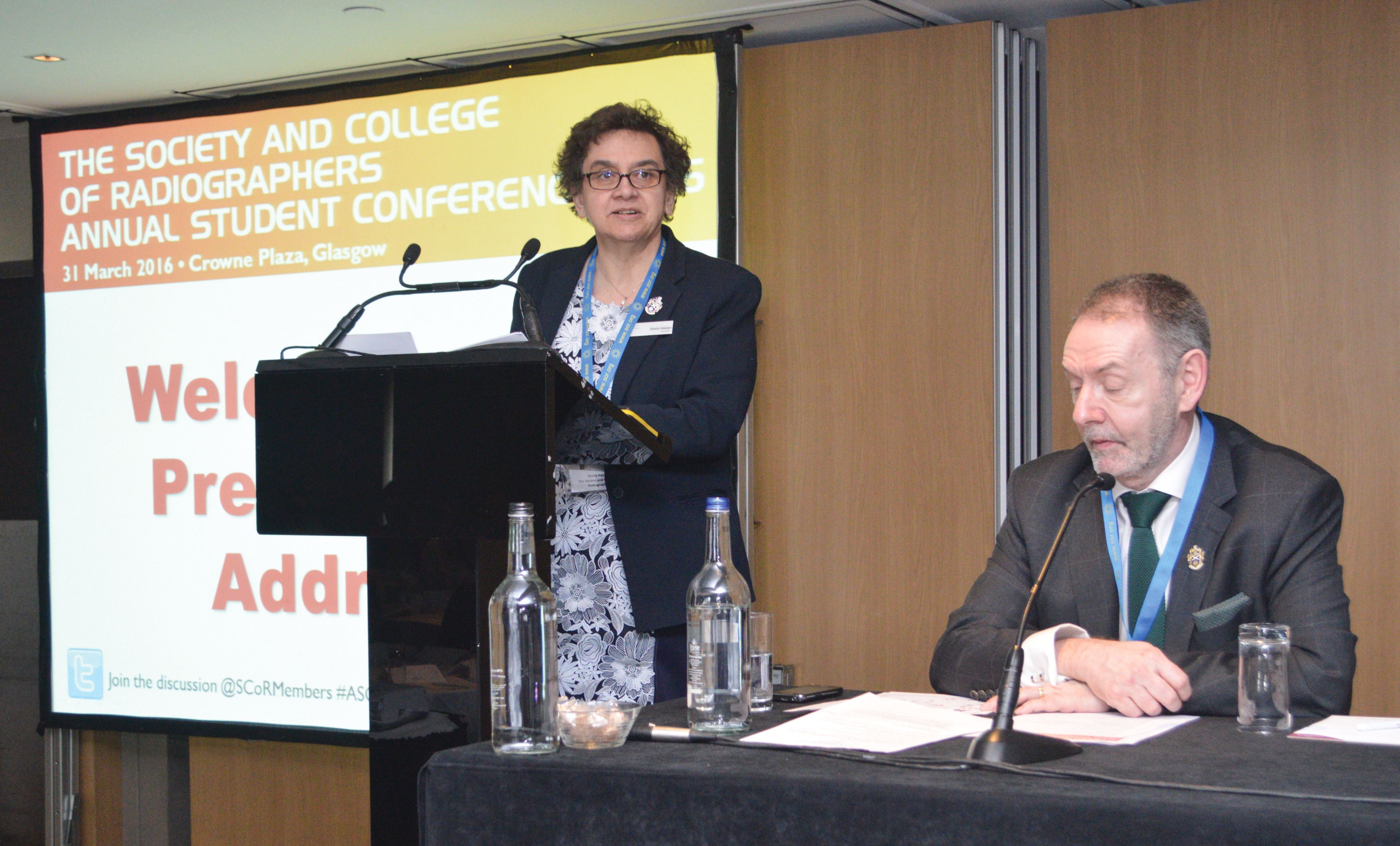
Sheila speaking at the 2016 SoR Annual Student Conference
Sheila speaking at the 2016 SoR Annual Student Conference
“In those days it was full time or nothing,” Sheila says. “There was very little agency work and it was still quite common that, if you had children, you gave it up. I was a full-time mum for 10 years, and then for nine years I was a special needs assistant at my children’s local school.
“Then, one day, my daughter saw an advert on TV saying there was a shortage of radiographers. She said: ‘Mum, why don’t you do that?’ And something clicked.”
Sheila managed to secure an honorary contract at Reading Hospital in the school holidays in 1999, as a preliminary introduction to restarting her radiotherapy career. “I’d never been to Reading before and, as I walked into the radiotherapy centre, I felt I was going home. I felt I belonged,” she adds.
With the decision for her future career made, the next step for Sheila was securing a job. She wrote to various hospitals and was offered a role on a trial basis, without a guarantee of a job at the end. “I decided, very crazily, to turn that down,” she admits.
Instead, Sheila turned back to Guy’s and St Thomas’, discovering there was an assistant grade position that she could enter, towards the end of 1999. After visiting the department and meeting the radiotherapy service manager, however, she discovered there was a “real crisis” in radiotherapy. “We were talking about masses of vacancies, something like 17 agency staff,” she says. “They put a special package in for me, and they did a three-month return to practice course. Either I was successful, or I needed more training. Luckily, I was successful.”
With her past experience, Sheila made it up to Band 7 in no time. She explains that working as a mother and working at a school had helped her develop the organisational skills that remain vital to communicating with her team to this day. “Working with children with special needs helped me to understand people’s needs, and how to adapt processes to make everyone feel included and able to work. I was just working with someone the other day who mentioned that their work with kids at school had helped them to become a radiographer.
“Especially in this day and age, where we’re so much more aware of neurodiversity, those skills have become invaluable.”

Sheila first got involved with the London Regional Committee after an invitation to its Annual General Meeting with her manager in 2003. There, she discovered there was a radiotherapy vacancy available – which she was “very kindly” pushed towards.
Having now been involved with its operations for 22 years, Sheila says she had learned a lot about the radiography career and how to make the most of it. “If you want career progression, if you want satisfaction in your career, getting involved in your regional committee is essential,” she adds.
It was only through her involvement there that she got notice of the London Council member resigning and needing a replacement on short notice – which is how Sheila went on to become part of UK Council. By 2015, she was on the presidential pathway. “None of that would have happened if I hadn’t joined the London Regional Committee,” she explains. “It helps with your identity as a radiographer, it helps with your career, and you meet the most fantastic people, from across the whole of radiography. I think of all the benefits I’ve gotten; it’s the kind of stuff you can’t find anywhere else and it really makes a difference to your day to day. It keeps you engaged, keeps you motivated and it really helps with your mental health.”
The right people
Sheila holds many roles now – stereotactic radiotherapy lead at Guy’s and St Thomas’, chair of the London Regional Committee (LRC), British Institute of Radiology council member and a trustee of the SoR’s Benevolent Fund, which grants financial assistance to members, former members and their dependants.
As chair of the LRC, part of Sheila’s duties is to organise the London regional study day, including coming up with topics, finding venues and ensuring the day runs smoothly. In fact, Sheila explains, last year’s venue – Novotel London West, in Hammersmith – was chosen because somebody on the committee had an existing connection. “A lot of what you do, you have to have connections,” she says. “You have to be out there making connections, which I do quite well.”
Once a study day venue is secure, Sheila and the rest of the committee are then tasked with recruiting speakers on a diverse range of subjects. Again, committee members lean on the contacts they’ve made throughout their years as radiographers.
Organising study days in London can leave costs running quite high, so the LRC team has been leaning more into the use of sponsorship for the study days. Sometimes these are external companies, but more recently the team took a change of direction by asking the industry leaders who were presenting at the study day to sponsor it.
Another key element of the study day is the letter to manufacturers, asking them to display and promote their products. “You can’t just ask the manufacturer to sponsor,” she explains. “They want some information, so you’ve got to have a letter that profiles how the day is being run, who the target audience is, that kind of thing. The key to a good study day is in the stands – the delegates have more to do than just attend the talks; they can engage with vendors as well.”
Managing a regional committee isn’t an easy task, but it’s one Sheila has tackled with aplomb for eight years now. Her experience has been that keeping the people in her region active and engaged with the society is really difficult, especially with the myriad challenges facing the NHS.
But, she says, that doesn’t mean it can’t be done. “It’s about making sure you’ve got the right people on your committee,” she adds, explaining the success the LRC has had over the years. “You want people engaged with students. You want people engaged in education. You really want a researcher. You want people who are out there doing things.
“The only reason I get sponsorship is because I’ve been around a lot on these conferences, and people get to know me. You’ve got to build relations on the committee. You’ve got to have people who go to conferences. The other thing we’ve been doing for some years now is inviting people from headquarters to come and speak at our events.”

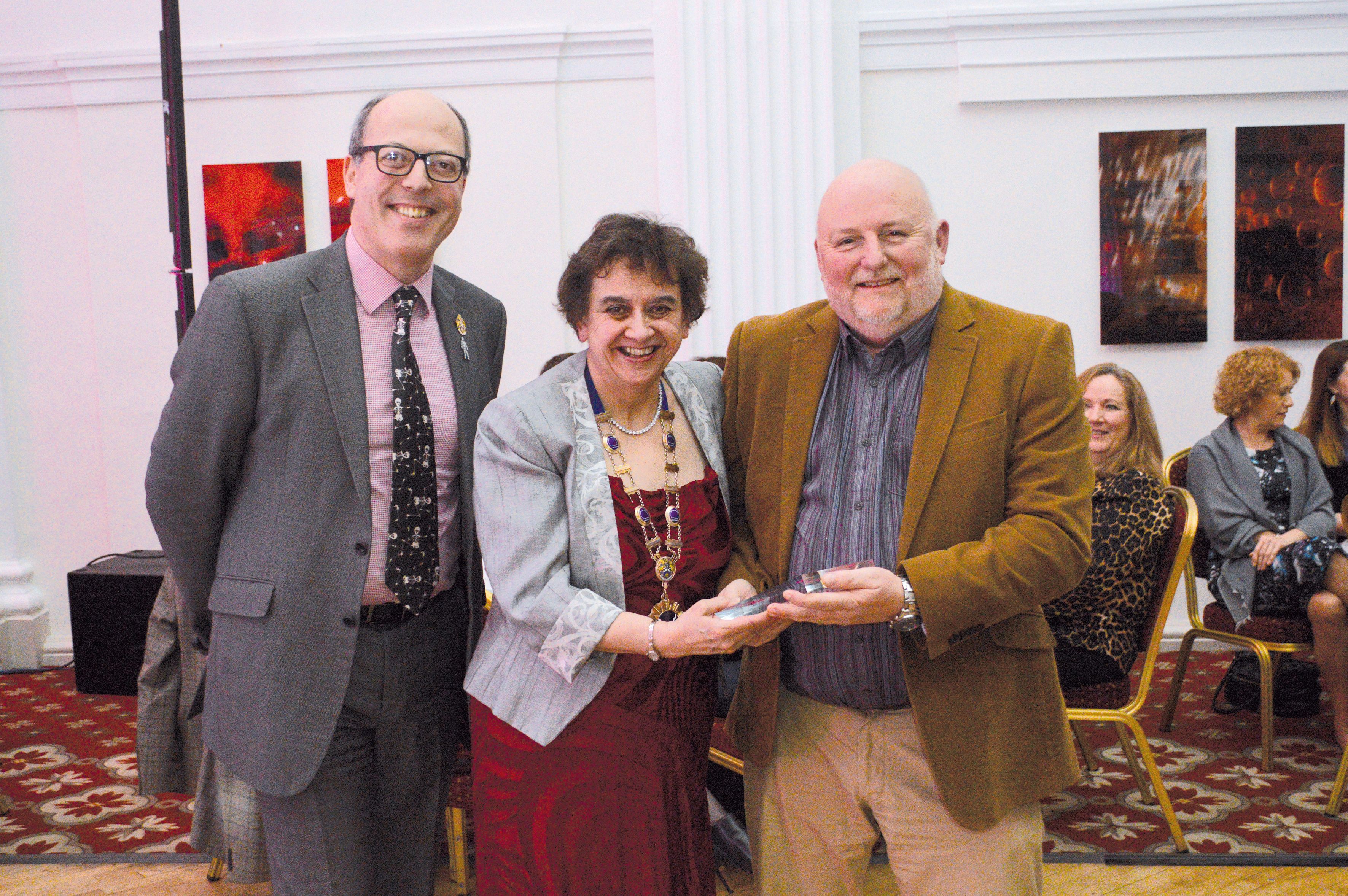
SoR CEO Richard Evans (left) and Sheila presenting a College of Radiographers Industry Partnership plaque to Phil Neale during her presidential year
SoR CEO Richard Evans (left) and Sheila presenting a College of Radiographers Industry Partnership plaque to Phil Neale during her presidential year
What people want
Keeping a balance in the committee between reps and professional radiographers is also important, Sheila notes. Many members are indeed such because of the union benefits – but many joined because of the professional benefits as well.
In fact, the most successful study days of Sheila’s career have been the ones focusing on that professional aspect. Aspects of the profession such as terms and conditions will be covered during their training and plenary membership, she explains. “One year, we did a study day all about breast imaging, and it was a sellout,” she says. “We had to go back to the venue and get a bigger hall. Mammographers don’t get an awful lot of dedicated input – they were involved, and we had a lot of mammographers who would not normally come to a study day.”
The event itself covered the breast pathway from diagnosis through to treatment, over different demographics.
Detailed topic sessions aren’t the only way to grab members’ attention, though – the London region study days have previously been held at London Zoo, the London Transport Museum, the War Museum, even the Tower of London. Importantly, the content is key. “It’s because of the involvement of these broad swathes, like mammographers – they are able to give you the insight into what people actually want from a study day,” Sheila says.
The next London region study day will be held at the London Novotel West.
“It’s important [to attend your local study day],” she continues. “One of the biggest advantages of coming along is the continuing professional development and the learning. It’s also helpful to engage in the regional committee, to get to know who they are. I’m always looking for new committee members.
“When I first joined, we had quite a rigid membership, certain officers for certain things. If someone says they’d like to join the committee, I invite them on. I don’t worry about whether they’ll be taking on a specific role, because you want an active regional committee.”
Taking care of the day-to-day clinical work of radiography while also working to develop your career, improve your skills and support your fellow radiographers can be a daunting task. But, Sheila says, that is what makes the job so worth it. Operating in such an intense environment can wear on mind and body – that’s why finding the balance and leaning on all the resources at your disposal is so important.
Whether opportunity originates from the regional committee, from internal Trust schemes or from other organisations from further afield, it’s vital that it is seized. “I think getting involved in the SoR brings so many benefits,” she says. “It broadens your horizons beyond your every day job, adding depth that enhances your mental health and job satisfaction. It gets you to meet some exceptional people who provide inspiration and encouragement to develop in your career.”


By Will Phillips
By Will Phillips
“Building connections,” says Sheila Hassan, “is one of the most important things we can do.”
Having qualified as a radiographer in 1978, Sheila is no stranger to building connections with patients. She has worked at Guy’s and St Thomas’ NHS Foundation Trust in London since 1999 as a Therapeutic Radiographer, and for the last eight of those has been project radiographer in intracranial stereotactic radiotherapy, where building rapport with repeat visitors is key.
But as a former president of the SoR (2015-16), she’s just as familiar with the importance of building connections across the profession. As chair of the London regional committee, Sheila has been working to improve events such as study days and conferences in her area. To that end, she explains, the key focus is on connections – not just with patients, or just with radiographers, but with stakeholders from across the healthcare spectrum.
Synergy caught up with Sheila at this year’s UK Imaging and Oncology conference to ask her to share her wisdom on therapeutic radiography, the importance of building connections and how best to engage with the society to support your career.
An early start
Sheila first discovered her interest in radiography after by chance picking up a book about careers at her school library at the Magna Carta School Egham Hythe Surrey, aged 17.
After talking to her school’s careers leader, she discovered she needed maths, physics and biology – her three best subjects. “I thought it fitted,” she says. “The entry requirements were different in those days. There were no university courses; you trained at a school of radiography based at a hospital.”
Sheila trained at Guy’s and St Thomas’ Hospital School of Radiography from 1976 to 1978, where she earned a diploma for her two-year course. She then went on to University College London for two years (until 1980), before taking a career break after becoming a mother.
Sheila speaking at the 2016 SoR Annual Student Conference
Sheila speaking at the 2016 SoR Annual Student Conference
“In those days it was full time or nothing,” Sheila says. “There was very little agency work and it was still quite common that, if you had children, you gave it up. I was a full-time mum for 10 years, and then for nine years I was a special needs assistant at my children’s local school.
“Then, one day, my daughter saw an advert on TV saying there was a shortage of radiographers. She said: ‘Mum, why don’t you do that?’ And something clicked.”
Sheila managed to secure an honorary contract at Reading Hospital in the school holidays in 1999, as a preliminary introduction to restarting her radiotherapy career. “I’d never been to Reading before and, as I walked into the radiotherapy centre, I felt I was going home. I felt I belonged,” she adds.
With the decision for her future career made, the next step for Sheila was securing a job. She wrote to various hospitals and was offered a role on a trial basis, without a guarantee of a job at the end. “I decided, very crazily, to turn that down,” she admits.
Instead, Sheila turned back to Guy’s and St Thomas’, discovering there was an assistant grade position that she could enter, towards the end of 1999. After visiting the department and meeting the radiotherapy service manager, however, she discovered there was a “real crisis” in radiotherapy. “We were talking about masses of vacancies, something like 17 agency staff,” she says. “They put a special package in for me, and they did a three-month return to practice course. Either I was successful, or I needed more training. Luckily, I was successful.”
With her past experience, Sheila made it up to Band 7 in no time. She explains that working as a mother and working at a school had helped her develop the organisational skills that remain vital to communicating with her team to this day. “Working with children with special needs helped me to understand people’s needs, and how to adapt processes to make everyone feel included and able to work. I was just working with someone the other day who mentioned that their work with kids at school had helped them to become a radiographer.
“Especially in this day and age, where we’re so much more aware of neurodiversity, those skills have become invaluable.”
Sheila first got involved with the London Regional Committee after an invitation to its Annual General Meeting with her manager in 2003. There, she discovered there was a radiotherapy vacancy available – which she was “very kindly” pushed towards.
Having now been involved with its operations for 22 years, Sheila says she had learned a lot about the radiography career and how to make the most of it. “If you want career progression, if you want satisfaction in your career, getting involved in your regional committee is essential,” she adds.
It was only through her involvement there that she got notice of the London Council member resigning and needing a replacement on short notice – which is how Sheila went on to become part of UK Council. By 2015, she was on the presidential pathway. “None of that would have happened if I hadn’t joined the London Regional Committee,” she explains. “It helps with your identity as a radiographer, it helps with your career, and you meet the most fantastic people, from across the whole of radiography. I think of all the benefits I’ve gotten; it’s the kind of stuff you can’t find anywhere else and it really makes a difference to your day to day. It keeps you engaged, keeps you motivated and it really helps with your mental health.”
The right people
Sheila holds many roles now – stereotactic radiotherapy lead at Guy’s and St Thomas’, chair of the London Regional Committee (LRC), British Institute of Radiology council member and a trustee of the SoR’s Benevolent Fund, which grants financial assistance to members, former members and their dependants.
As chair of the LRC, part of Sheila’s duties is to organise the London regional study day, including coming up with topics, finding venues and ensuring the day runs smoothly. In fact, Sheila explains, last year’s venue – Novotel London West, in Hammersmith – was chosen because somebody on the committee had an existing connection. “A lot of what you do, you have to have connections,” she says. “You have to be out there making connections, which I do quite well.”
Once a study day venue is secure, Sheila and the rest of the committee are then tasked with recruiting speakers on a diverse range of subjects. Again, committee members lean on the contacts they’ve made throughout their years as radiographers.
Organising study days in London can leave costs running quite high, so the LRC team has been leaning more into the use of sponsorship for the study days. Sometimes these are external companies, but more recently the team took a change of direction by asking the industry leaders who were presenting at the study day to sponsor it.
Another key element of the study day is the letter to manufacturers, asking them to display and promote their products. “You can’t just ask the manufacturer to sponsor,” she explains. “They want some information, so you’ve got to have a letter that profiles how the day is being run, who the target audience is, that kind of thing. The key to a good study day is in the stands – the delegates have more to do than just attend the talks; they can engage with vendors as well.”
Managing a regional committee isn’t an easy task, but it’s one Sheila has tackled with aplomb for eight years now. Her experience has been that keeping the people in her region active and engaged with the society is really difficult, especially with the myriad challenges facing the NHS.
But, she says, that doesn’t mean it can’t be done. “It’s about making sure you’ve got the right people on your committee,” she adds, explaining the success the LRC has had over the years. “You want people engaged with students. You want people engaged in education. You really want a researcher. You want people who are out there doing things.
“The only reason I get sponsorship is because I’ve been around a lot on these conferences, and people get to know me. You’ve got to build relations on the committee. You’ve got to have people who go to conferences. The other thing we’ve been doing for some years now is inviting people from headquarters to come and speak at our events.”
SoR CEO Richard Evans (left) and Sheila presenting a College of Radiographers Industry Partnership plaque to Phil Neale during her presidential year
SoR CEO Richard Evans (left) and Sheila presenting a College of Radiographers Industry Partnership plaque to Phil Neale during her presidential year
What people want
Keeping a balance in the committee between reps and professional radiographers is also important, Sheila notes. Many members are indeed such because of the union benefits – but many joined because of the professional benefits as well.
In fact, the most successful study days of Sheila’s career have been the ones focusing on that professional aspect. Aspects of the profession such as terms and conditions will be covered during their training and plenary membership, she explains. “One year, we did a study day all about breast imaging, and it was a sellout,” she says. “We had to go back to the venue and get a bigger hall. Mammographers don’t get an awful lot of dedicated input – they were involved, and we had a lot of mammographers who would not normally come to a study day.”
The event itself covered the breast pathway from diagnosis through to treatment, over different demographics.
Detailed topic sessions aren’t the only way to grab members’ attention, though – the London region study days have previously been held at London Zoo, the London Transport Museum, the War Museum, even the Tower of London. Importantly, the content is key. “It’s because of the involvement of these broad swathes, like mammographers – they are able to give you the insight into what people actually want from a study day,” Sheila says.
The next London region study day will be held at the London Novotel West.
“It’s important [to attend your local study day],” she continues. “One of the biggest advantages of coming along is the continuing professional development and the learning. It’s also helpful to engage in the regional committee, to get to know who they are. I’m always looking for new committee members.
“When I first joined, we had quite a rigid membership, certain officers for certain things. If someone says they’d like to join the committee, I invite them on. I don’t worry about whether they’ll be taking on a specific role, because you want an active regional committee.”
Taking care of the day-to-day clinical work of radiography while also working to develop your career, improve your skills and support your fellow radiographers can be a daunting task. But, Sheila says, that is what makes the job so worth it. Operating in such an intense environment can wear on mind and body – that’s why finding the balance and leaning on all the resources at your disposal is so important.
Whether opportunity originates from the regional committee, from internal Trust schemes or from other organisations from further afield, it’s vital that it is seized. “I think getting involved in the SoR brings so many benefits,” she says. “It broadens your horizons beyond your every day job, adding depth that enhances your mental health and job satisfaction. It gets you to meet some exceptional people who provide inspiration and encouragement to develop in your career.”


Find out more about the London Regional Committee
The London Regional Committee (LRC) is made up of SoR members who wish to work together to promote the work of the SoR within the region, coordinate the motions and representation of the London Region at the Annual Delegates Conference (ADC) and organise the regional study day.
To find out more or to express an interest in being involved with the committee please email
London@sor.org. Membership is available to students, retired members, and anyone at any stage of their career in between.
Image credit: Getty Images
Find out more about the London Regional Committee
The London Regional Committee (LRC) is made up of SoR members who wish to work together to promote the work of the SoR within the region, coordinate the motions and representation of the London Region at the Annual Delegates Conference (ADC) and organise the regional study day.
To find out more or to express an interest in being involved with the committee please email London@sor.org. Membership is available to students, retired members, and anyone at any stage of their career in between.
Image credit: Getty Images
Read more