

Celebrating global health partnerships: a personal perspective of international mentoring for radiographers
Chrespers Birengeso, Katie Seager and Alison Sanneh share their experience of a unique collaboration between cancer centres in the UK and Uganda



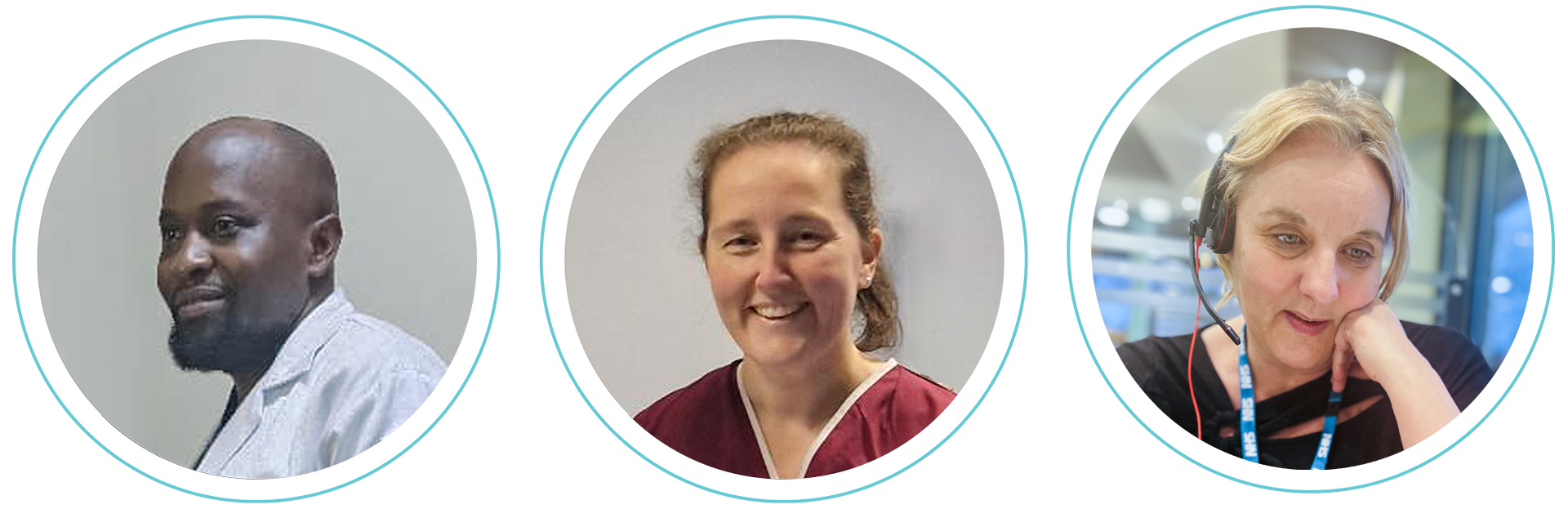
Chrespers Birengeso, radiographer/sonographer, Uganda Cancer Institute
Katie Seagar, clinical educator/radiographer, Clatterbridge Cancer Centre
Alison Sanneh, global health leader/Therapeutic Radiographer, The Christie NHS Foundation Trust
Global health focuses on collective efforts across the world to improve health, achieve equity and reduce disparities for all people. The World Health Organization identifies cancer as a major global health concern and calls on countries to invest in cancer services to address inequalities and improve outcomes.
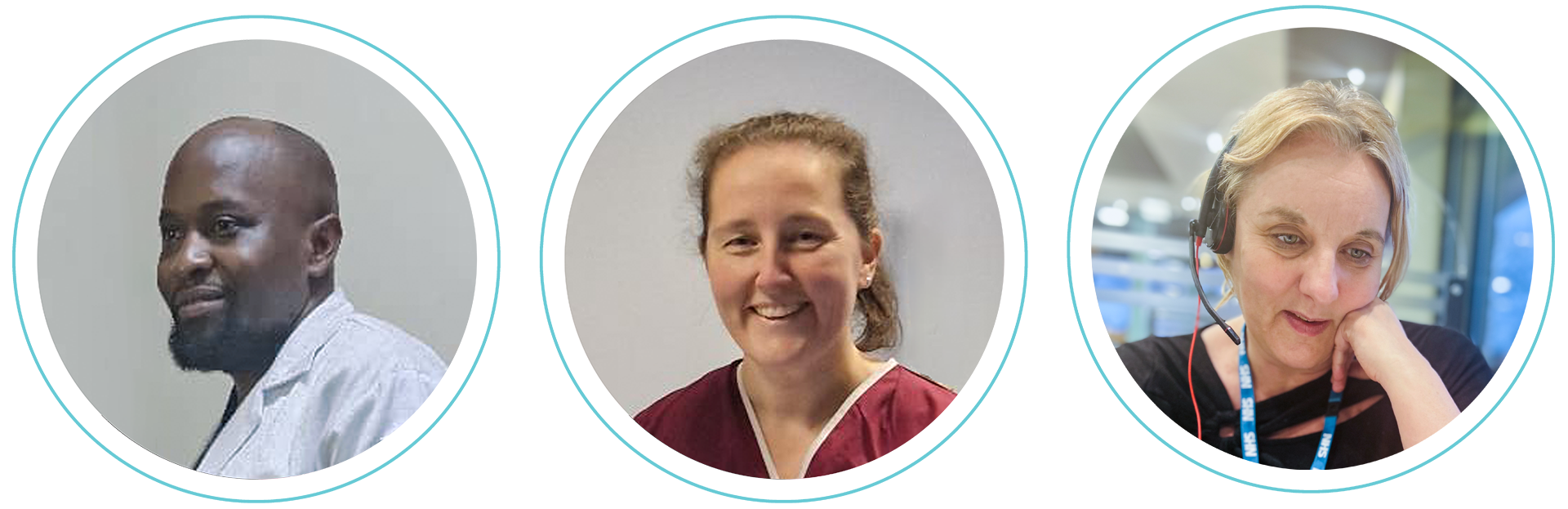
Chrespers Birengeso, radiographer/sonographer, Uganda Cancer Institute
Katie Seager, clinical educator, radiographer, Clatterbridge Cancer Centre
Alison Sanneh, global health leader/Therapeutic Radiographer, The Christie NHS Foundation Trust
Global health focuses on collective efforts across the world to improve health, achieve equity and reduce disparities for all people. The World Health Organization identifies cancer as a major global health concern and calls on countries to invest in cancer services to address inequalities and improve outcomes.
Global health partnerships
Global health partnerships bring organisations together, such as the NHS and international partners, to tackle health challenges and strengthen the workforce so it can respond effectively to community needs.
In 2023, Global Health Partnerships (formerly THET) launched a Remote International Mentoring Partnership Scheme (RIMPS). The Christie NHS Foundation Trust secured a small grant connecting UK NHS cancer professionals with colleagues at the Uganda Cancer Institute. This project was led by Alison Sanneh, a Therapeutic Radiographer and global health leader. Over the course of two years, four mentors from the UK supported 10 mentees from the Uganda Cancer Institute.
One successful partnership was the one between Katie Seager, a Diagnostic Radiographer at Clatterbridge Cancer Centre in Liverpool, and Chrespers Birengeso, who is based at the Uganda Cancer Institute in the Ugandan capital, Kampala. Here, Katie and Chres share their personal and professional experiences of building a strong and fruitful relationship. They also reflect on the impact of their investment on patients and colleagues and offer advice to colleagues who are interested in developing a global health portfolio.

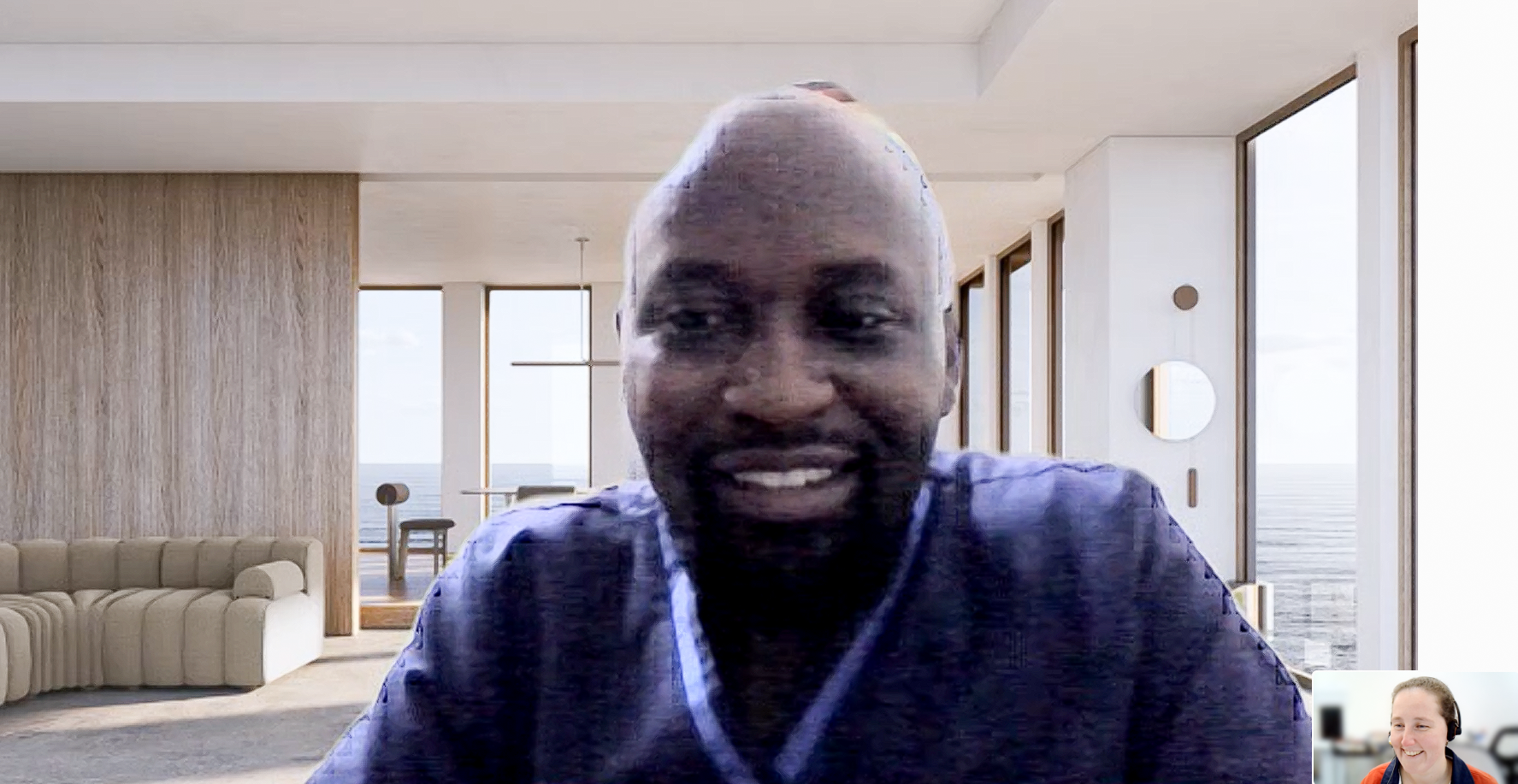


Katie Seager, clinical educator and radiographer at the Clatterbridge Cancer Centre
Katie Seager, clinical educator and radiographer at the Clatterbridge Cancer Centre
Katie’s journey
In 2022, I spent six months living in Gulu, Northern Uganda, where I worked on an NHS England project to help improve the quality of X-rays performed in two hospitals. I absolutely loved my time there and, on my return to the NHS, I felt my main passions and purpose lay in the global health setting. Fast forward a few years and I was presented with an exciting opportunity to mentor a radiography colleague, Chres, who was based in Uganda.
Before meeting Chres, I reflected on how I would approach the mentoring, knowing we were at similar stages of career in terms of our years qualified. After chatting for a short while, it quickly became apparent that we could see our partnership as not only mentoring but also as peer support. We could both learn and benefit from each other’s experiences.
Throughout our chats over the last six months, we have discussed different aspects of leadership, such as implementing change, inspiring others, managing difficult conversations, utilising different communication styles and empowering students in their learning. It was really interesting to discuss the similarities and differences between our radiology departments and how certain approaches can be applied to our work, no matter where we are.
We also talked about bigger projects that Chres is championing, such as protocol implementation in ultrasound, among many other modalities. Initially, I felt uncertain I would be able to help in this area as I am not trained in sonography. However, I discovered I was able to add value through project planning and logistical support. This proved that you don’t need to be an expert in everything to be a mentor; you can simply offer the skills and expertise you do have and watch the mentees flourish as a whole. I also felt it was important to empower Chres within this project, recognising his expertise in the field.
Throughout the mentoring, it was interesting to talk about the cultural differences between our departments. After previously spending six months in Gulu, I had observed some of the cultural differences and, after further exploring these, it helped us both to develop our cultural intelligence and gave us a deeper appreciation of how different systems influence behaviours and leadership dynamics.
There were some logistical challenges in the mentoring sessions. One time, heavy rainfall in Kampala caused flooding throughout the city, disrupting travel. Chres was unable to travel home in time for our session, resulting in us rescheduling. Balancing challenges such as these with the demands of our sessions has helped me to develop a greater awareness and sensitivity to the real-life obstacles fellow radiographers face in a lower-middle-income country.
I am so thankful for this opportunity to chat with Chres, mentor him and learn from his experiences. So far, this mentoring journey has been mutually rewarding and developmental. I believe Chres has grown as a reflective and compassionate leader, while I have gained confidence, adaptability and insight into effective mentoring. I admire Chres’s enthusiasm, ambition and professionalism, and believe we share a sense of genuine respect and optimism in continuing with our partnership. I have learned how to be an empathetic and encouraging mentor, while also gently challenging Chres to promote deeper reflection and learning. I am excited to see how my mentoring style evolves over time as we continue with our sessions, and I’m eager for this collaboration to challenge and motivate me to further develop my appreciation of radiography practices in the global setting.
Chres’s journey
This partnership was a dynamic, cross-continental remote mentorship programme under RIMPS. Its focus was not only on clinical technique, but on the foundational pillars that support and improve day-to-day radiography management and practice to a world-class standard. Ours focused mainly on leadership and communication, education and protocol development.
The partnership came about as a result of the collaboration between the Uganda Cancer Institute (through Dr Nixon Niyonzima, head of research and training) and The Christie NHS Foundation Trust (through Alison Sanneh), who had previously visited the Uganda Cancer Institute. They came up with this concept together, which later matured into this cross-continental mentorship programme after winning a grant. After learning about the programme, I loved the idea and immediately enrolled for it.
For me, the partnership has been transformative. I was paired with Katie because of the similarity in our professions. We delved deeply into leadership, moving from a theoretical concept to practical application. We discussed managing difficult conversations and I learned the incredible power of approaching people’s problems from an understanding, rather than purely disciplinary, standpoint. This has already diffused tension and fostered a more cooperative environment in my workplace. One of the most resonant takeaways was the simple adage: ‘If it’s not written down, it didn’t happen.’ This emphasis on diligent record keeping and logging events has brought a new level of accountability and clarity to myself.
This mentorship has also been the catalyst for tangible, institutional change. Inspired by our discussions, we have initiated a Protocols Project, starting with ultrasound (even though Katie doesn’t practice it). We are also drafting a formal structure for our Oncology Imaging Division – a crucial step as Uganda moves towards creating human resource structures for super-specialised national referral health centres. Taking a leaf from the UK, it argues compellingly for radiographers to be supervised by radiographers and the central role specialised education and practice play in increasing diagnostic accuracy. The respect of boundaries and recognition of the central role of specialised radiologists in increasing diagnostic precision was also emphasised. At the end of it all, on the education front, our conversations directly led to the identification and planned rollout of the Nature of Cancer course for some of our staff at the institute. I also keenly remember Katie saying that we, as senior radiographers in the field, should always tell the student radiographers “to be the radiographer they wanted to meet when they were students” once they are in practice – an adage that calls for humility and the willingness to teach and learn from each other.
To any radiographer considering a global partnership, whether as a mentor or a mentee, I wholeheartedly recommend it. It is a rare privilege to learn and share from each other across the globe. My experience with Katie has taught me that this collaborative learning process is key to strengthening and streamlining healthcare delivery across the world – something I feel should encourage all radiographers to explore similar mentorship opportunities.
Mentorships are a two-way street. As much as you learn from your mentor, you can also offer valuable insights from your own experiences.
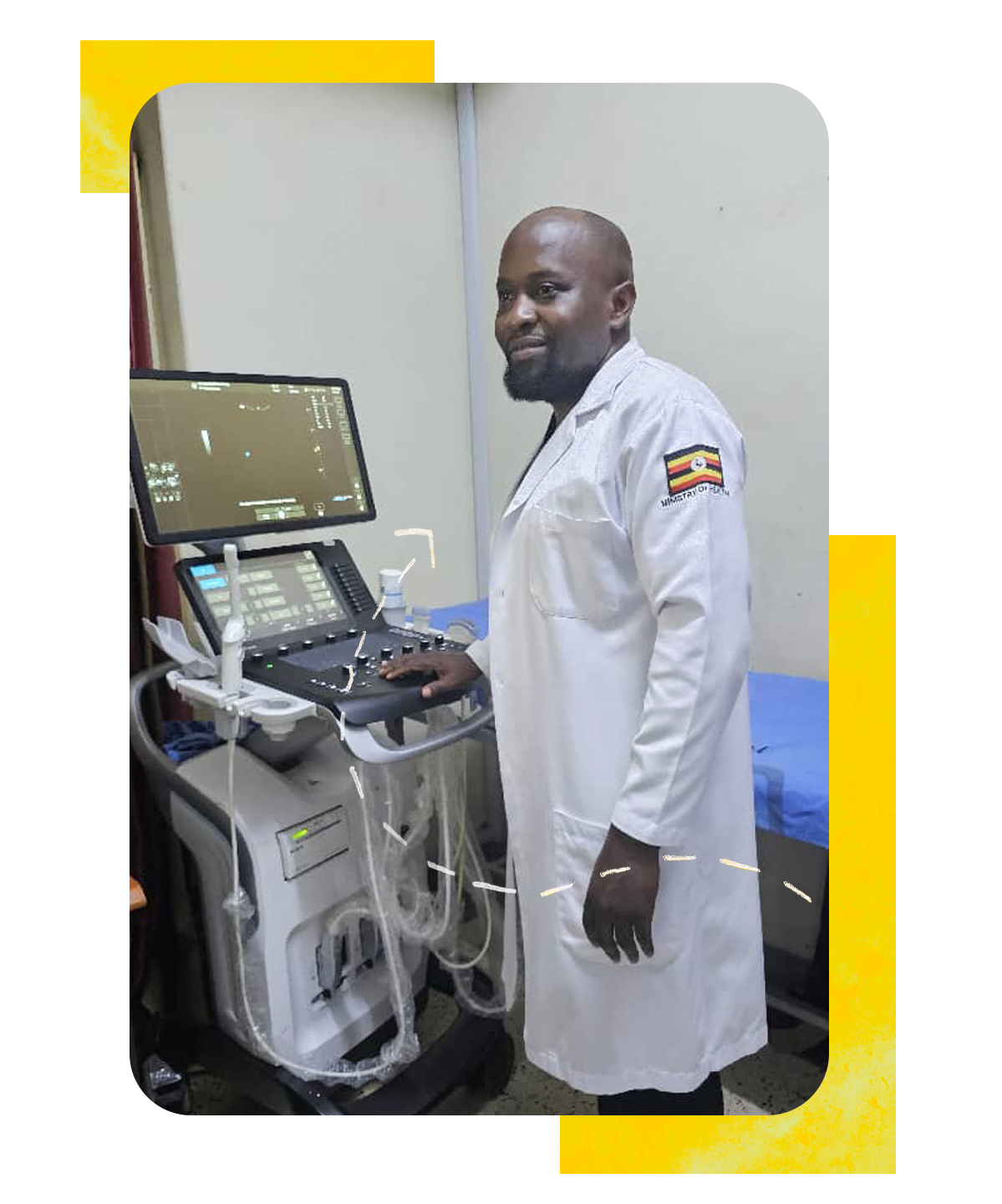
Chrespers Birengeso, radiographer/sonographer at the Uganda Cancer Institute
Chrespers Birengeso, radiographer/sonographer at the Uganda Cancer Institute
Shared purpose
Katie and Chres unequivocally demonstrate how global partnerships benefit the radiography workforce as well as the patients and communities we proudly serve.
Alison Sanneh, project lead, said: “I could not be prouder of the value Katie and Chres placed on their partnership, and their commitment to it. From day one, they have joined together with a shared purpose: to improve experiences for people in their care. While Chres benefitted from Katie’s insights into working in a technologically advantaged NHS, Katie was able to gain leadership skills, cultural competence and adaptability by working alongside Chres, as they problem-solved together.”
More about Global Health Partnerships
For colleagues who would like to be part of a global health venture, it is important to seek out organisations or professional groups with experience in global health partnerships and a commitment to key partnership principles. The Global Health Partnerships (formerly THET) principles recommend organisational governance that promotes strategic alignment to mentorship goals, mutual benefits for both mentor and mentee, respect and reciprocity, valuing individuals’ views, experience and contributions as equal partners, joint planning and implementation, monitoring, evaluation and learning, and transparency and accountability.
As an NHS radiographer relatively new to virtual international mentorship, Katie benefitted from accessing workplace coaching and mentoring supervision, supporting her ‘growth and recognition’ in navigating the dichotomy between teaching and mentoring. Katie was able to recognise her key role in ‘asking the right question’ (asking and remaining curious), as opposed to ‘giving the right answer’ (telling and assumed expertise because of technological advancements). We begin to appreciate the value of mentoring when it is positioned within a robust, quality-assured system – one that helps us get the most from our workforce and ensures everyone is safe and supported, wherever they practice in the world.
Alison would like to thank Global Health Partnerships, which funded this project, The Christie NHS Trust for its support in this venture and, most importantly, Katie and Chres for their dedication to the mentorship scheme.
Image credit: Getty Images
Read more